
Porsche Almost Built A 4-Door Sedan For A US Automaker Until John DeLorean Shut It Down
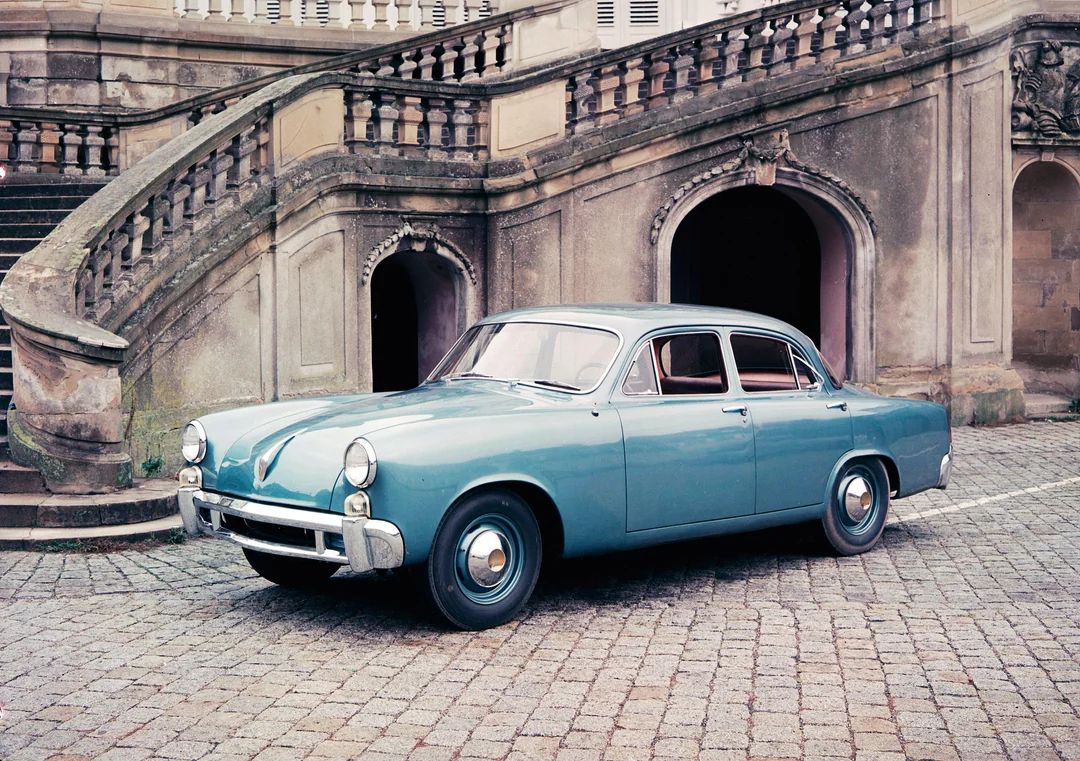
While most of us associate Porsche with their own legendary models, such as the iconic 911, the German marque has contributed to several creations by other automakers over the course of its long history. Due to economic circumstances, one of them never had the chance to become a production car: the Porsche 542. If that nameplate doesn’t sound very familiar, it’s because this Porsche was not supposed to be a Porsche at all: the company built a prototype for a struggling Studebaker, which, according to the original plan, was supposed to market the car under the name of Studebaker Z-87.
Porsche
Porsche is a German sports car manufacturer and part of the broader Volkswagen Group since August 2012. Founded in 1931 by Ferdinand Porsche, the brand is most famous for the 911 line of sports cars, which first launched in September 1963. But it was the Porsche 356 that came first, and subsequently, Porsche has expanded its model lineup to include a variety of sports cars, supercars, SUVs, sedans, and even EVs. Porsche has a rich history in motorsport, with 19 outright Le Mans victories to its name, among various other titles.
A Downward Spiral: Studebaker In The 1950s
Studebaker had a very long history in the American automotive world, being one of the very early automakers who was there to see the dawn of the “horseless carriage”. Originally a coachbuilder that created and sold horse-drawn wagons, Studebaker pivoted to the automobile at the very end of the 19th century, and enjoyed a good degree of success at the start of the 20th.
Over the course of the next five decades, the company fared well commercially, but at the start of the ’50s things began to turn sour. The post-war period brought about several challenges in the form of increasing competition from a growing number of rivals, and Studebaker was simply not prepared for the challenge of the booming 1950s automotive market. This led the company’s executives making a series of decisions, all within the span of a year or two, in an attempt to save the ailing company: a collaboration with Porsche, a merger with smaller automaker Packard, and a deal with aircraft maker Curtiss-Wright.
Over the course of this frenzied period, one curious prototype briefly emerged, before being consigned to the dustbin of history: the Studebaker Z-87, known on the other side of the Atlantic as the Porsche 542. Here is the story of the brief collaboration between Porsche and Studebaker, and the resulting car that never made it to the market.
An Unlikely Partnership: Studebaker And Porsche

The deal between the two companies came about thanks to two crucial figures. The first was Richard Hutchinson, then working as head of Studebaker’s export operations; Hutchinson was keen on expanding Studebaker internationally. The second was New York-based automobile importer Max Hoffmann, who had connections with both firms; he came up with the idea of a collaboration with Porsche, with the German company providing assistance to Studebaker on the technical and design fronts. Eventually, a meeting was arranged, with a small group of executives from Porsche flying out to Indiana in May 1952 to discuss the terms of the deal and present some prototypes to their American counterparts.

Add CarBuzz to your Google News feed.
A Doomed Project: The Creation Of The Z-87
|
The Porsche 542/Studebaker Z-87 In Numbers |
|
|
Engine |
3.0-liter V6 |
|
Power |
97/105 hp |
|
0-60 |
N/A |
|
Top Speed |
N/A |
When the Porsche delegation (Ferry Porsche himself, along with a small team of designers and engineers) arrived in Indiana, they brought along with them a Porsche 356 and a “Type 530”, a prototype long-wheelbase version of the 356. Neither of those captured the attention of the Studebaker team, who was after something else. Porsche agreed to develop a new prototype, and came up with two different variants of the 542 four-door sedan: an air-cooled version called the 542L, and a water-cooled one called the 542W. However, by the time the prototype had been fully developed, Studebaker’s financial struggles had become more pronounced, and the car itself did not leave the dazzling impression Porsche’s team was perhaps hoping for.
One person who was not particularly impressed with the car was the head of advanced engineering at Studebaker: a fellow by the name of John DeLorean, whose name would, decades later, make it into the automotive history books thanks to his own creation of silver-screen fame. DeLorean was skeptical about the car’s blob-like appearance, with its wide, rounded headlights, and on the mechanical front he observed its tendency to oversteer and vibration. Despite thinking the overall package had potential, DeLorean believed that some elements of it needed improvement before it could sell in the States.
“This vehicle has a large amount of technical appeal, but a number of items need refinement to increase its overall appeal as a small car to the average American car buyer”
-John DeLorean on the Studebaker Z-87 prototype
Why The Z-87 Went Nowhere

Around the time the Z-87 prototype was being completed, Studebaker’s economic difficulties were becoming hard to ignore, and it quickly became clear that the company did not have the funds to go ahead and turn the prototype into a production reality.
The merger with Packard signaled the death knell for the Z-87, as company executives decided that all future cars bearing the Studebaker name should be based on existing platforms. The Z-87 was not given the go-ahead to move into full-scale production, and the few prototypes in existence were sent to the crusher, with only a handful of photographs remaining as evidence they existed.
The Following Years: Studebaker’s Demise

With the attempt at a joint project with Porsche having ended in failure, Studebaker’s fortunes now relied on the merger with Packard, a smaller car manufacturer which, however, was doing better financially than the venerable marque. This, however, did not end up being the silver bullet that Studebaker executives were hoping for; in 1956, with the company on the verge of bankruptcy, a management deal was struck with aircraft maker Curtiss-Wright, with the hope that Studebaker could draw previous experience of building aircraft engines during World War 2.
A handful of models bearing the Studebaker badge, all based on older platforms, were released over the following five years, but nothing worked to turn the company around; in 1963 the company’s main manufacturing plant in South Bend, Indiana, closed down for good, and three years later the Canadian plant in Hamilton, Ontario followed suit. This marked Studebaker’s exit from the car business; a merged company called Studebaker-Worthington continued to manufacture components until 1979, when the Studebaker name disappeared completely.
Despite the project’s lack of success, Porsche still acknowledges its contribution, and even mentions the 542/Z-87 on its website, as part of a written history of its engineering services across the decades.
Other Automotive Creations With Porsche DNA
The ill-fated Studebaker is not the only car by another automaker to be created with some input from Porsche: here are some other examples of cars that carry a little bit (or a lot) of Porsche DNA.
Audi RS2 Avant
The car that kick-started Audi’s legendary RS2 high-performance division, the RS2 Avant is best known for the turbocharged five-cylinder engine that powers it; this engine was already pretty powerful on its own, but some help from Porsche engineers further boosted its output to 311 hp. The result of the collaboration was highly successful, with an additional 691 cars built (over the original target of 2,200) due to customer demand.
SEAT Ibiza
A tiny hatchback, very popular in Europe but little known outside of it, the SEAT Ibiza was created with some help from Porsche. The first-generation model was equipped with a Porsche-designed powertrain, and even sported a “System Porsche” badge on its engine block, which SEAT had to pay a small sum for the privilege of using.
Mercedes-Benz 500E/E500
A high-performance version of the W124, the 500E was only in production for five years, between 1990 and 1995. Fitting the 5.0-liter V8 from the SL-Class into the W124 chassis was a complicated feat, accomplished with some help from the Porsche team. Porsche also assisted in the construction of the individual cars, which were hand-built and moved between the two companies’ facilities.
Sources:
Porsche,
GoClassic
,
Mac’s Motor City Garage
,
Time