
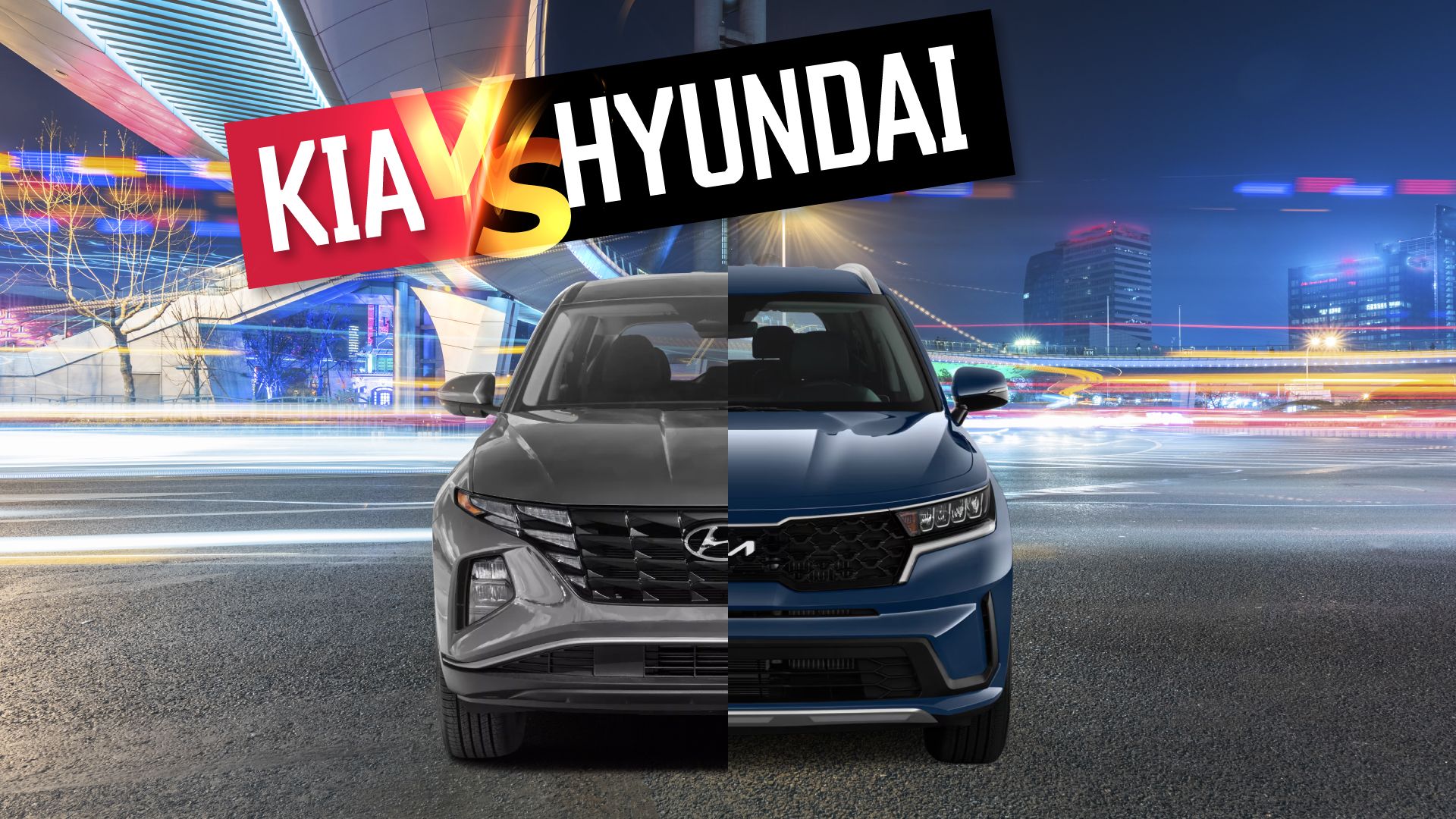
10 Key Differences Between Korea’s Automotive Giants
Kia and Hyundai are two brands that have worked hard to establish a fan base – and the increase in popularity of cars from these stables is proof that hard work pays off. Both hailing from South Korea, these carmakers have captured a significant share of the global market with their affordability, reliability, and industry-leading warranties.
Is Kia and Hyundai the same company? This is a common question. Despite being sister companies under the same corporate umbrella – Hyundai Motor Group – these two brands cater to different audiences and bring unique characteristics to their product lineups. Here are 10 key differences that will help you understand the Kia vs Hyundai debate, and decide which brand might be the right fit for you.
All information has been sourced from the manufacturer. Other sources have been listed at the end of this article.
1 Origin Story
Kia Has Been Around Longer
Kia may seem like the newer kid on the block, but it actually predates Hyundai. Founded in 1944 as a manufacturer of bicycle parts, Kia eventually moved into the automobile industry. Hyundai, on the other hand, was founded later, in 1967, although the Hyundai Engineering and Construction Company that preceded it was in existence since the late 40s. Despite Kia’s head start, it was Hyundai that quickly became the automotive giant, partnering with Ford to produce the Cortina in 1968, and developing and releasing its first car – the Hyundai Pony – in the mid-1970s. Less than a decade later, it was selling cars in the British market, and in Canada. By 1985, one million Hyundai cars had been built, and the brand entered the American market in 1986.
Kia didn’t produce its first car until much later, although it was building small motorcycles and trucks in the early 70s. Kia then built the Brisa range of cars for a short while and assembled Fiat and Peugeot models under license and within strict regulations, before having its work disrupted by the political climate in 1981. The automaker kicked off production again in 1986, and in 1992 found its way to the USA, but due to the financial crisis in Asia in the late 90s, Kia declared bankruptcy. The Hyundai Motor company acquired 51% of the company in 1998 and has gone from strength to strength since. Today, Kia and Hyundai are often mentioned together, but it’s Kia that has technically been around longer.
2 Luxury Lineup
Hyundai Has A Luxury Division – Does Kia?
When it comes to premium status in the Kia vs Hyundai comparison, one of the mainthings to note is that Hyundai has its own luxury division called Genesis. What started as a luxury sedan in the early 2000s became an independent brand in 2015, launching its first car, the Genesis G90, just two years later. Genesis quickly gained a reputation for offering affordable luxury with vehicles like the G70 and G90, competing directly with brands like BMW and Mercedes-Benz.
Kia does not have a dedicated luxury division, although some of its models do aim to provide luxury on a budget; the Kia K900 is a good example, although that was discontinued years ago. You’ll find affordable luxury and premium features on top trims in models like the EV9 and Telluride, but it’s clearly not the brand’s focus. So, if you’re wondering which is more luxurious, Kia or Hyundai, the answer is clearly Hyundai via Genesis.
3 Design Elements and Style
Sporty Styling vs. Modern Looks
In recent years, Kia has focused heavily on sportier, bolder designs, which fits in with what we mention above. With models like the now-discontinued Kia Stinger and the new Kia K5, the brand appeals to younger drivers looking for a car with attitude. Kia’s distinctive “tiger-nose” grille and more aggressive styling cues set it apart from Hyundai’s ultra-modern lineup.
Hyundai has updated its range to all have similar styling elements that see its models look like they’ve been chiseled to have the faces you find on diamonds and gemstones. This very specific look is ultra modern, to our eyes, while still appearing sophisticated and futuristic. If you want a car with a sporty edge, Kia is the way to go. Slick and smooth sedans and SUVs with contemporary features come from Hyundai.
4 Pricing
One Automaker Has Higher Price Tags
When comparing prices, Hyundai vehicles are generally slightly more expensive than their Kia counterparts, even though both brands offer similar features and options. Take the Hyundai Palisade and Kia Telluride, for example – both are mid-size SUVs built on the same platform, but the Palisade generally starts at a higher price point due to its more premium interior finishes. Here’s a quick comparison of some models:
|
Rivals |
Kia Price* |
Hyundai Price* |
|---|---|---|
|
Kia Forte vs. Hyundai Elantra |
$19,990 |
$21,625 |
|
Kia Telluride vs. Hyundai Palisade |
$36,190 |
$36,400 |
|
Kia Sportage vs. Hyundai Tucson |
$27,090 |
$27,250 |
|
Kia Sorento vs. Hyundai Santa Fe |
$31,990 |
$33,950 |
* Pricing refers to the MSRP of the entry-level models for 2024, excluding options and destination
The price difference may be small, but it can tip the scales for budget-conscious buyers when weighing up Hyundai vs Kia.
5 Performance Division
Hyundai Has Something Kia Doesn’t

While both brands offer performance-oriented models, only Hyundai has a dedicated high-performance arm, known as the N division. This includes an attached factory-backed professional motorsport race program dedicated to earning on-track competition accolades and high-performance vehicle research and development. The Elantra N is the souped up version of the humble sedan, while the Ioniq 5 N is the groundbreaking electric N-performance version of Hyundai’s electric crossover. We were suitably blown away with this exceptional car when we drove it, and it showcases the brand’s focus on providing track-ready performance in an affordable package.
Kia sadly discontinued the Stinger GT and now doesn’t really offer any pure performance models; the new K5 sedan is available in a hot GT trim, but there’s no dedicated performance focus. So if you’re looking for a racy high-performance option, Hyundai N cars are your answer.
6 Industry-Leading Warranties
Same, But Different
One of the key reasons both Kia and Hyundai have gained popularity is their industry-leading warranties. Both brands offer 10-year/100,000-mile powertrain warranties, which are among the best in the business. However, Hyundai slightly edges out Kia in terms of additional perks.
Hyundai provides complimentary scheduled maintenance for three years or 36,000 miles, something Kia doesn’t currently offer – some Kia dealerships include a two-year/24,000 mile maintenance plan, however. If you’re wondering if Kia or Hyundai is better when it comes to warranties, Hyundai gets a slight nod for this added benefit.
7 Areas Of Specialty
One Has A Minivan, One Has a Truck
Despite being sister brands, Kia and Hyundai don’t always compete head-to-head in the same vehicle segments. For instance, Kia is the only one of the two brands that offers a minivan (or MPV as the brand labels it) called the Kia Carnival, while Hyundai is the only one to offer a pickup truck – the Hyundai Santa Cruz. This gives consumers more choices within the Hyundai Motor Group depending on their needs. If you’re deciding between a Kia or Hyundai, it may depend on which type of vehicle you need. This leads us to the next point…
8 About Electrification
One Is EV-Focused, The Other Is Hybrid-Minded

Both Kia and Hyundai are making strides in the electric vehicle (EV) space, but Kia is putting more emphasis on electrification across its lineup. With models like the Kia EV6 and the Kia EV9, Kia aims to become a leader in the EV market. While Hyundai has its own electric models, like the Ioniq 5 and Ioniq 6, Kia’s recent marketing efforts and future product plans suggest it’s taking a more aggressive approach in the EV race.
In terms of hybrid models, both brands have hybrid and plug-in hybrid options across the lineup, but Kia has a few more SUV hybrids while Hyundai also makes two sedans available with hybrid power. Hyundai also offers the Nexo Fuel Cell, something Kia doesn’t touch on.
Kia Hybrids – 7 models:
- Niro Hybrid and PHEV
- Sportage Hybrid and PHEV
- Sorento Hybrid and PHEV
- Carnival Hybrid
Hyundai Hybrid – 6 models:
- Tucson Hybrid and PHEV
- Santa Fe Hybrid and PHEV
- Elantra Hybrid
- Sonata Hybrid
The tally for electric cars is closer: Kia offers three EVs (Niro EV, EV6, and EV9) and Hyundai makes four (Kona, Ioniq 5 and 5N, and Ioniq 6).
9 The Best-Sellers List
Hyundai Has The Edge
When it comes to sales, Hyundai has the edge, perhaps due to its broader model lineup and presence in more global markets. As of 2023, Hyundai sold approximately 4.2 million vehicles worldwide, compared to Kia’s 3.1 million. The higher sales figures reflect Hyundai’s larger global reach, especially in foreign markets. Whereas Kia sells cars in 172 countries, Hyundai covers 193 countries across the globe with around 2,000 more dealerships for the Hyundai brand.
10 Target Market
Hyundai Offers More Advanced Tech Features

There are two parts to this point, the first being that while both Kia and Hyundai offer affordable cars to Joe Everyman, there are some differences. Kia models with their sportier appearance and fun-to-drive nature appeal to a more youthful audience, while Hyundai’s models are aimed at the more traditional buyer with a family and a focus on convenience, comfort, and reliability.
The types of technology on offer from each brand also affirm this, with Hyundai’s features focused on driver assistance systems and infotainment upgrades, while Kia produces some of the coolest technology that play into enjoyable driving and incredible handling. Examples of this include the simulated DCT gearbox on the all-electric Ioniq 5 N, it’s clever drift mode, and mindblowing soundtrack.
Sources:
Kia News Center
;
Hyundai Newsroom
.