

Best Hyundai Tucson Model Years For Reliability
The Hyundai Tucson is not one of the oldest models the Korean brand has produced since its founding, but each generation has been a popular choice among options available in the ever-competitive compact crossover segment. Many buyers have chosen the Tucson thanks to its practicality, generous safety equipment, and factory warranty coverage offered by Hyundai – all for unmatched value that other rivals cannot offer for the same amount.
Hyundai
Hyundai Motor Company was founded in 1967 by Chung Ju-yung, 20 years after the birth of the Hyundai Engineering and Construction Company. The automotive marque’s first model was the Cortina, birthed with the help of Ford in 1968, while its first self-developed car arrived the year after as the Pony. Since then, the company has found success with affordable cars and has consistently become known for reliability and value. Nowadays, its ventures vary from combustion, hybrid, all-electric, and hydrogen mobility solutions to robotics.
- Founded
- 29 December 1967
- Founder
- Chung Ju-yung
- Headquarters
- Seoul, South Korea
- Owned By
- Hyundai Motor Group
- Current CEO
- Jae-Hoon Chang
While other compact crossover SUVs from Japanese brands have proven to be some of the most reliable examples on the market, it does leave one to wonder how this Korean offering competes when it comes to long-term reliability. Here’s our recommended buy and our take on which Hyundai Tucson years to avoid.
Reliability data has been sourced from the NHTSA. Recalls and complaints listed, as well as feedback from consumer surveys, have been taken into account. Authoritative sources are listed at the end of the article.
Hyundai Tucson: History and Generations Overview
The Hyundai Tucson first arrived in the US market for the 2005 model year, placed below Hyundai’s full-size SUV, the Hyundai Santa Fe. The first generation also shared the same Hyundai Elantra-derived platform and parts used by a similar Korean SUV at the same period, the Kia Sportage (JE/KM-generation). Similar to how other Korean cars were marketed and perceived during this period, the Tucson was viewed as a solid, practical crossover that could do everything expected of a family SUV – at an attractive price point. This first version of the Tucson was primarily concerned with serving as an appliance to get from point to point, and little else.

Add CarBuzz to your Google News feed.
As Hyundai underwent a top-to-bottom rebranding that transformed its company image and design language, these changes were also reflected into the second-generation Tucson. The brand’s very generous warranty coverage and great value continued to be its key selling points, but now with a front fascia with slight inspiration from the brand’s flagship Genesis Coupe (which were the first signs Korean cars were undergoing a major transition from basic to attractive products) and sloping lines.
But the Tucson truly experienced a breakthrough moment with its third generation – bringing styling that aligned more with current generation vehicles, and an equally modern interior. Several features made their first appearance in Tucson models from this generation onwards, including turbocharged engines, a dual-clutch automatic transmission, and various driver assistance technologies such as blind spot monitoring and automatic emergency braking.

Related
2025 Hyundai Tucson Is Still A Sub-$30k Bargain
Pricing for the MY2025 Tucson kicks off at $28,355 for the entry-level SE trim.
This fresh approach gave the Tucson a premium interior feel that continued into its fourth (and current) iteration. The Hyundai SUV features an even more radical exterior appearance, with daytime running lights integrated into its front grille, enlarged fenders, and sloping side door profiles. The sporty appearance could also be brought out further with Hyundai’s sports-focused ‘N-Line’ trim that now includes the Tucson. A facelift was recently launched for the 2025 model year, which updates the front to include skid plates, continues to offer the off-road inspired ‘XRT’ trim, and a fully digital instrument cluster with more futuristic-style climate control/infotainment controls. The latest Hyundai Tucson also features the most diverse powertrain options across all generations (1st-3rd) – which now consists of full gasoline engines, gasoline hybrids, and a PHEV (plug-in hybrid) for the US market.
|
Hyundai Tucson: Generations And Key Specs |
||||
|---|---|---|---|---|
|
Generation |
Model Years |
Engine Options |
Transmission |
Key Features |
|
1st Gen (JM) |
2005–2009 |
2.0L four-cylinder, 2.7L V6 |
4-speed automatic |
First generation to be sold in US market. No frills, basic transportation in an affordable compact SUV-crossover package. Available with FWD and ‘4WD’ with 50/50 power distribution function. Only Tucson generation to feature V6 power. |
|
2nd Gen (LM) |
2010-2015 |
2.0L/2.4L-four-cylinder |
5-speed manual, 6-speed automatic |
V6 engine dropped, all Tucsons only feature four-cylinder units going forward. Only generation to offer a fuel cell variant, known as the Tucson FCEV. |
|
3rd Gen (TL) |
2016-2021 |
2.0L/2.4L four-cylinder, 1.6L turbocharged four-cylinder |
6-speed automatic, 7-speed dual-clutch automatic |
Modern-era styling makes appearance,. First generation to offer hybrid model, touchscreen infotainment system, and dual-clutch transmission. Safety assistance systems added as equipment. |
|
4th Gen (NX4) |
2022-present |
2.5L four-cylinder, 1.6L turbocharged four-cylinder hybrid/plug-in hybrid |
8-speed automatic, 7-speed dual-clutch automatic |
Plug-in hybrid model, N Line sports-inspired trim introduced. Only offered as long wheelbase for US market. |
In assessing the best and worst Tucson model years for reliability, 2021 and more recent models have been excluded due to their limited reliability data. While we do mention the Hyundai Tucson FCEV (Hydrogen Fuel Cell) that was made from 2013 to 2018, our assessment for the least and most reliable Tucson years will primarily focus on the gasoline-powered Tucsons.
The Best Hyundai Tucson Model Years
Buyers looking into a secondhand Hyundai Tucson will want the one that is least likely to run into mechanical issues. We recommend these specific model years of the Hyundai crossover SUV, based on current data available about recalls issued and complaints from existing or previous Tucson owners.
As with any secondhand/used car purchase, we recommend doing
due diligence
to find an example that is the least likely to encounter major issues – even among those with relatively low mileage or with a comprehensive service history. A pre-purchase inspection performed by a qualified service technician or mechanic is always recommended.
2020 Hyundai Tucson

If we needed to single out the best year for Hyundai Tucson buyers to consier, it would be 2020. The fourth-generation Tucson from 2020 is ideal. This is because 2020 front-wheel drive and all-wheel drive Tucsons are examples made towards the end of the fourth-generation’s production run, with the majority of the issues plaguing earlier models and parts now rectified. Buyers should note that these are still affected by the urgent safety recall surrounding a possible fire hazard caused by the ABS module, so insist on requesting documentation showing this fix has been performed by an official Hyundai technician. Some owners also report intermittent issues affecting onboard electronic features, so it is worthwhile to look carefully.
Beyond these, this going-on four-year-old SUV should be fairly reliable – we recommended 2020 Tucsons as the best buy for those in the market for one, citing its high customer satisfaction grades and reports out of all used Tucson model years.
“In terms of reliability, the 2020 Tucson has received some admirable mentions from automotive industry staples giving it solid grades. J.D. Power rated it 85/100 for Quality and Reliability, while KBB’s research of 132 owners resulted in 70% of them recommending the vehicle to potential buyers. Cars.com gives the compact SUV 4.7/5 stars with 92% of the drivers questioned recommending it.”
– Matt Rodriguez, CarBuzz
2005 Hyundai Tucson
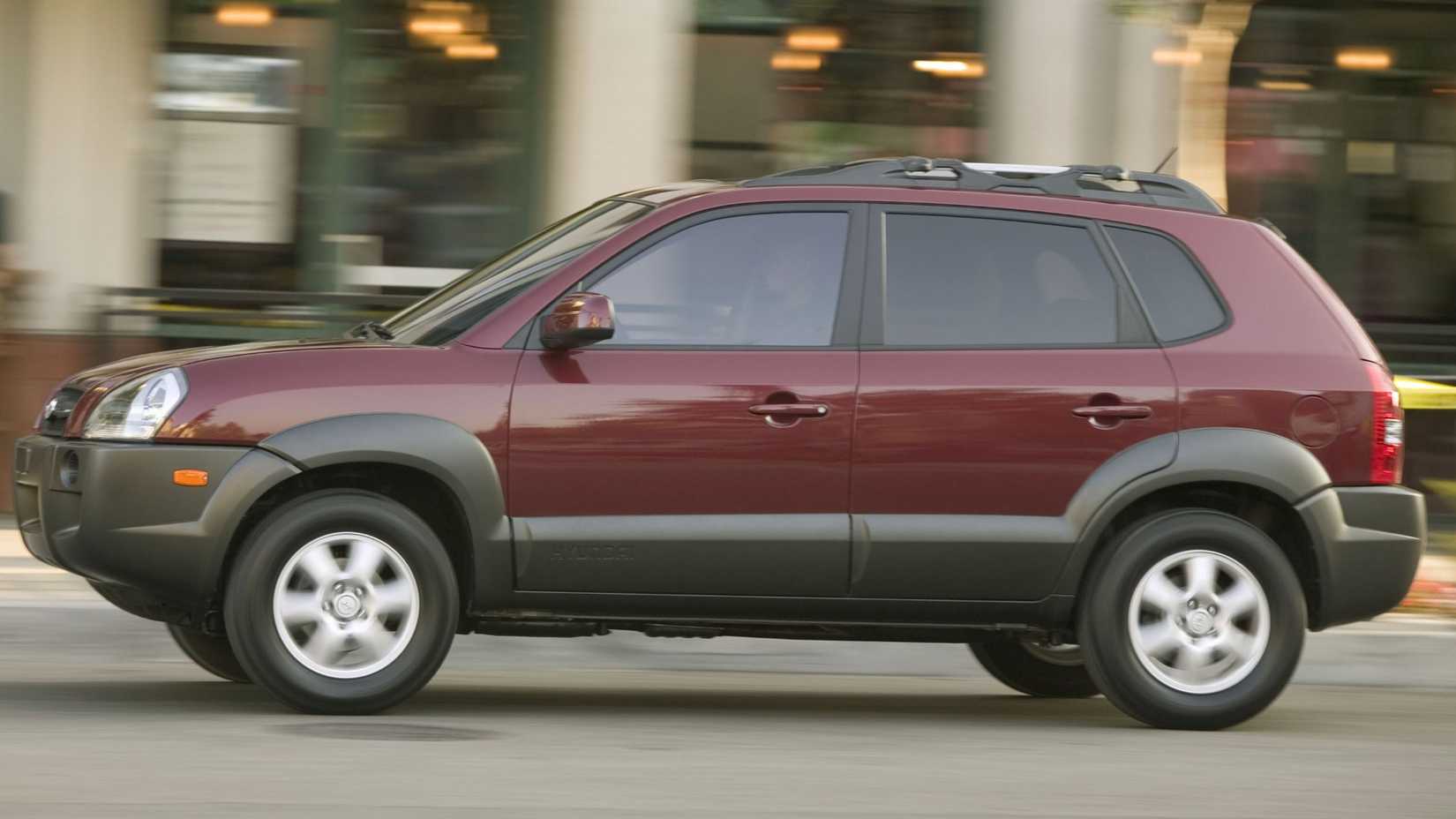
While the early models of some of the oldest cars should be avoided due to their age, the opposite applies for the 2005 Hyundai Tucson. Though some may have been well-used and have high mileage, these first-generation Tucsons report on the lower end of customer complaints (43 recorded complaints), according to CarComplaints.com and NHTSA data. The only recall affecting this model year is a rear stop light operating intermittently – which does cause a car to be potentially ‘unroadworthy’ on inspection, but is minor compared to significant mechanical parts defects.
2009 Hyundai Tucson

Some of the most reliable, and most affordable examples of the Hyundai Tucson can be found among the first-generation models made for 2009. Not only do these late models benefit from slight aesthetic improvements, but being made towards the final years of this Tucson generation means they benefit significantly from better quality control of their components and equipment – especially those attached to the SUV’s electrics, running gear, and safety features. It’s hard not to pass up one of the least expensive Korean family SUVs that makes for an excellent budget-friendly, no-frills choice for people who need a practical family car they can rely on, with up-to-date safety equipment like anti-lock brakes and ESC (Electronic Stability Control). Adding to these plus points in reliability, this generation of the Tucson had the option of a potent V6 engine, which some buyers may find desirable for good pulling power.

Related
This Korean SUV Is A Blatant Jeep Grand Cherokee Copy
The SsangYong Torres is clearly “inspired” by Jeep.
Hyundai Tucson Model Years To Avoid
Looking through resources such as Car Complaints, the NHTSA, and owners’ forums, we narrowed down these specific model years of the Hyundai Tucson to avoid due to high number of complaints and recalls. There’s a common thread among these model years:
Commonly Reported Issues
- Transmission problems
- Engine failure
- Air conditioning system issues
- Intermittent loss of power/operation of transmission (hesitation, no acceleration when starting from a stop)
2017 Hyundai Tucson

The first-year examples of third-generation are particularly troublesome – it was not the best year for the Hyundai Tucson. CarComplaints and the NHTSA list these as the most troublesome out of all Tucson years, most notably the 2017 examples that list a high number of cases involving transmission issues, hesitation to accelerate/intermittent power delivery, and the infamous Hyundai fire hazard recall caused by a faulty ABS module.
Adding to this, data trends show that this Tucson model year, as well as the preceding models for 2016, report the highest number of complaints out of all generations of the Tucson. Therefore, we advise avoiding the 2016-2017 third-generation Tucsons.
“Although the 2016 Hyundai Tucson has the most overall complaints, we rate the 2017 model year as worse because of other possible factors such as higher repair cost or more problems at lower mileage.”
The dual-clutch transmission unit in these Hyundai cars were also more prone to experiencing mechanical problems and other issues that revised transmission units would have ironed out over time.

Related
Hyundai Recall Totals 130,000 For Faulty Transmission
Cars could go into neutral after failed soldering causes an oil pump malfunction.
2012 Hyundai Tucson

Second-generation Hyundai Tucson models made for 2012 should be avoided. As with other Hyundai models between 2011-2012, the Tucson was also affected by a manufacturer-issued recall to resolve issues with components that could potentially cause a fire without warning. This included a possible engine oil pan leak that required a replacement oil pressure switch, and more recently of September 22, 2023, replacing the anti-lock brakes (ABS) system module’s fuse that could leak brake fluid and possibly short circuit, sparking a fire within the engine compartment when parked or driving.
“Hyundai Motor America (Hyundai) is recalling certain 2011-2013 Tucson vehicles. The engine oil pan may leak and, if not addressed, the loss of oil may result in engine damage. Hyundai has notified owners, and dealers will inspect for an oil pan leak, replacing it if necessary, and install an updated oil pressure switch, free of charge.”
Anything that poses a fire hazard to a vehicle should be taken seriously – even with provided documentation showing the recall fixes have been reported to have been performed, these models are riskier than others.

Related
The Biggest SUV Recalls In US History
SUVs are the most popular vehicles in the US automotive market. They are also subject to intense recalls. Here are the largest SUV recalls.
Summary: Dependable Family Hauler

Initially treated as the entry-level choice of motoring when compared to far more alluring European and Japanese cars, Korean brands like Hyundai have now established themselves in the market as reliable and dependable for buyers in the USA. From attractive designs to extensive standard cabin tech, these are further complimented by brands like Hyundai offering some of the most generous factory warranty coverage plans in the market. The same principles apply to popular SUVs like the Hyundai Tucson, which has proven to be a competitive option against the likes of the Nissan Rogue, Honda CR-V, and Toyota RAV4.
The Tucson should prove to be a fairly reliable car, though you should avoid buying one of the models from the past ten years affected by the widespread engine fire recall. If your budget only extends to the older first-generation models, be sure to check for rust and the state of the mechanical components, especially among those with high mileage or rough use on and off the road.
Sources:
NHTSA
,
CarComplaints.com
,
J.D. Power