
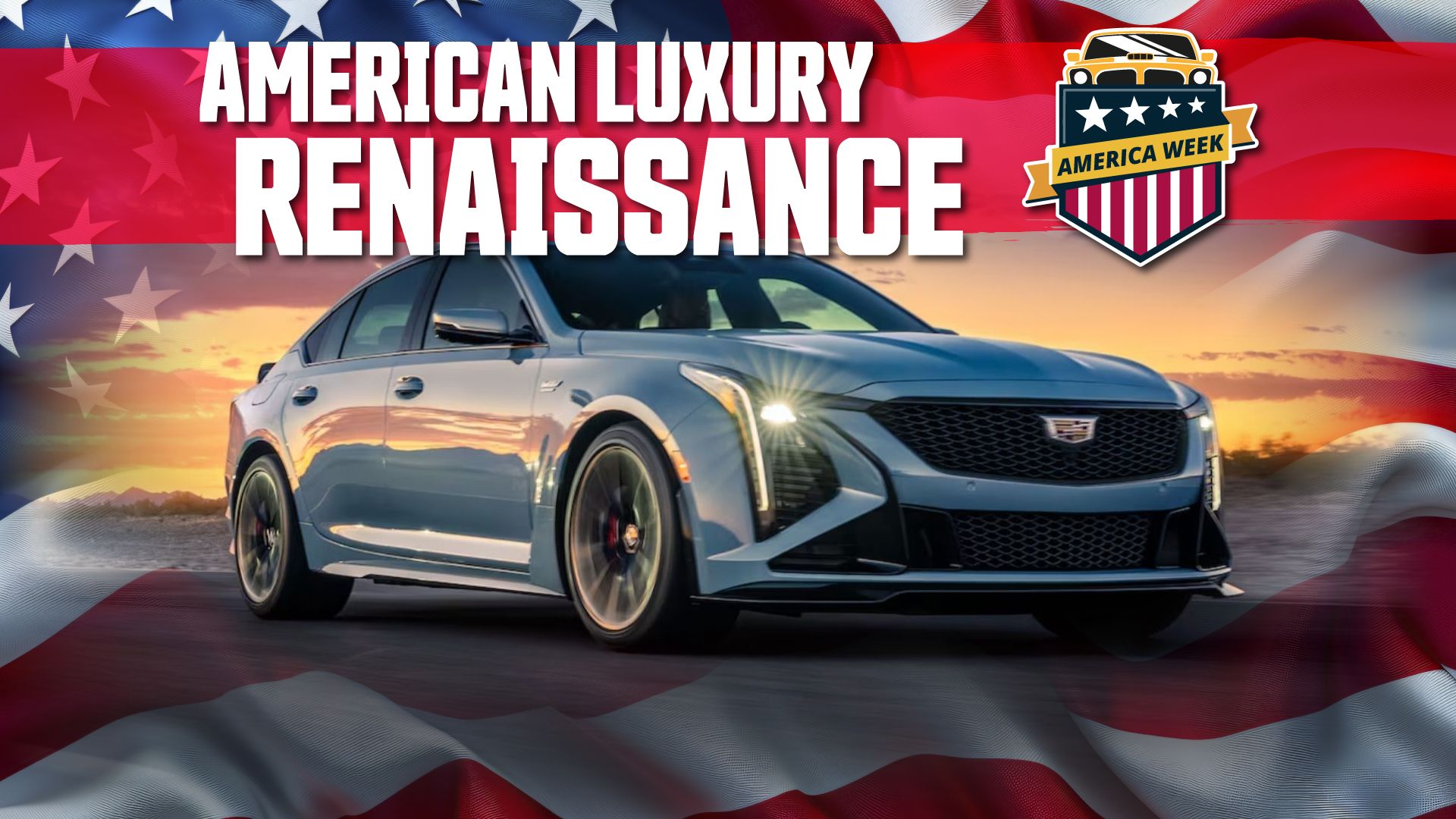
Cadillac, Lucid, And Rivian Are Bringing Back American Luxury
In decades past, US manufacturers were the kings of offering plush land yachts that were more relaxing to drive than spending a weekend at a high-end spa. Cadillacs and Lincolns from the mid-20th century came with immensely relaxing rides, comfy cabins, and tons of equipment that made them feel more like rolling palaces than cars. As the 1980s and 1990s rolled around, these opulent machines fell by the wayside in favor of European rivals.
Cadillac
- Founded
-
1902
- Founder
-
Henry Leland
- Headquarters
-
Warren, Michigan
- Owned By
-
General Motors
- Current CEO
-
Johan de Nysschen
After a few decades behind the curve, the era of the US luxury car is well and truly back, and there are more choices than ever. This is how American brands are bringing a renewed fight against their rivals on the other side of the Atlantic.
This piece analyzes why American luxury cars have struggled to match their European rivals in recent years, but why various US brands are improving their offerings to the point of becoming a real thorn in their side in 2025 and beyond.
American Brands Have Struggled To Match Established European Competition
Over the last few decades, American luxury brands such as Cadillac and Lincoln have lagged behind their European rivals, notably BMW, Mercedes-Benz, and Jaguar, primarily because these manufacturers have been building vehicles that feature superior technology and interior quality. Cadillac and Lincoln have also been guilty of using a significant number of parts from lower-value vehicles from sister brands, such as Chevrolet and Ford. They were often cheaper than models from their European competitors, but given how far a step-down they were in terms of quality and engineering prowess, they needed to be.
Why American Luxury Cars Have Failed To Succeed On The Market Over The Last Few Decades
- Lacked the engineering prowess of their Euro counterparts
- Interior quality was sub-par
- Cars generally lacked refinement compared to Euro offerings; those after top-level quality paid the extra money for an overseas model.
- Extremely low prices weren’t enough to make a difference
Take the Cadillac DTS, for instance, the brand’s full-size luxury sedan available between 2005 and 2011. It was designed to challenge the likes of the Mercedes S-Class, though it fell short in several key areas. The Merc was available with a range of more refined and powerful engines, as well as plush air suspension that ensured it not only rode more smoothly than the DTS but was also more responsive when being driven hard. The S-Class’ cabin was also afforded more premium materials, ensuring it was a class above. In recent years, Cadillac, in particular, has decided to right the ship and has been pushing hard to rebuild its lost reputation as the authority on large luxury vehicles.
Cadillac Is Taking Aim At The Biggest Luxury Brands In The Business
As well as looking to fight the likes of BMW and Mercedes-Benz at their own game, Cadillac is even looking to snatch customers away from the mighty Rolls-Royce with its new Celestiq ultra-luxury sedan. Not only does the car sport a more striking exterior design, but the four-wheel-drive halo sedan also produces 655 hp courtesy of a dual-motor electric powertrain, over 70 hp more than the Rolls-Royce Spectre EV. The extra grunt doesn’t come with the caveat of reduced range either, as the Celestiq boasts a max driving distance of 303 miles, while the Rolls comes up well short of the 300-mile mark. The Cadillac’s futuristic cabin also straddles a fine line between being advanced and not alienating buyers. The hand-crafted construction will be teamed with the most premium materials. Bearing in mind the Celestiq costs around $80,000 less than the Rolls, it’s likely to give the Spectre a headache.
Its current CT5 midsize sedan also stacks up well against the BMW 3 Series and Mercedes-Benz C-Class, with the Cadillac offering excellent luxury and practicality but at a similar price point. When it comes to size and interior plushness, the CT5 sits between the likes of the 3-Series/C-Class and 5-Series/E-Class, but only costs the same as the smaller models.
Cadillac is also aiming to build its reputation by entering world-class racing series, such as Formula 1 and the World Endurance Championship, as well as increasing its reach in the lucrative European market. The approach is working, too, given the CT5 has been selling extremely well recently.
Lincoln Is Trying Its Best To Match Cadillac’s Rise
Cadillac’s upmarket rival, the Ford-owned Lincoln, is also working to reclaim its place as a key player in the luxury market tree. The marque’s models have boasted impressive cabins for some time, and the new Nautilus SUV and refreshed Navigator have made a much-needed splash. However, the brand has some way to go to start giving Cadillac, let alone the Europeans, something to think about.
American Upstarts Are Entering The Fray
Aside from historic brands like Cadillac and Lincoln, the American onslaught is further bolstered by new upstart brands, which are using the EV revolution to muscle in on the established players. Lucid Motors and Rivian are the two marques in question, with the former entering the luxury space with its Air sedan, and soon its Gravity SUV, while the latter is taking on the likes of the Cadillac Lyriq with its R1S SUV.
Both brands have been busy plotting global expansions, with Lucid and Rivian pushing hard to start shipping their cars in Europe as different countries accelerate their infrastructure to ensure the EV revolution becomes a reality. Aside from being immensely powerful and efficient electric powertrains, both models also boast intricate cabins that combine comfort with tons of standard equipment, all at a reasonable price compared to their rivals. From a technological standpoint, even these relatively new brands have taken the lead in what Europeans have achieved in the luxury EV arena.
The American Renaissance Stands A Good Chance Of Succeeding
All in all, the rise of the American luxury sector stands a strong chance of success. Not only have these new American contenders retained their knack for bringing style into the equation, but they have also largely caught up technologically, at least when it comes to EV hardware. The quality of the vehicles has also improved markedly when compared to the cars that emerged in the 1990s and 2000s. Even then, a Cadillac still provides excellent value for money compared to an equivalent BMW or Mercedes-Benz model.
How US Brands Can Reclaim The Luxury Market Initiative
- Offering cars with stand-out interiors that boast quality on par with Euro rivals
- Continue improving engineering to be on the same level, if not ahead, of brands like BMW, Mercedes-Benz, Genesis, etc.
- Ensure that their reputation for bringing stylish cars to the party remains intact
- Keep offering these elements, but at a price point that ensures they’re better value than Euro competition
The American brands can essentially achieve what upcoming Chinese marques are, undercutting the Europeans in terms of offering affordable EVs, while providing cars that are ahead of the curve when it comes to power and efficiency. Should they continue to get the balance correct, there is every chance that US-built vehicles could once more become the benchmark for luxury cars across various price points. The key will be retaining their value advantage over their European competitors, while offering vehicles with engineering and cabin quality that are at least on par with theirs. Given their current offerings and with progress being made across a range of US brands, the Europeans need to focus their efforts to remain competitive in the premium segment.
Sources: Cadillac, Lincoln, Lucid Motors, Rivian