
Every Porsche 911 Generation And What They Are Worth Today
The 911 is arguably Porsche’s most important model range and has been a mainstay since the 1950s. The latest generation 911 range is overseen by the RS model, which represents the near pinnacle of the German automaker’s performance and engineering capabilities. Even with a varied lineup, the 911 range continues to grow and evolve.
This constant evolution comes at a cost. These days, a base Carrera is a $100,000 car, but there are few cars that cost as much and do so many things so well. It’s also a relative bargain when you compare it against some of its predecessors. The 911 name is so famous that people are still willing to pay a premium decades after a specific model generation was released. With that in mind, we decided to look at what each generation of 911 is worth in 2024.
Porsche
Porsche is a German sports car manufacturer and part of the broader Volkswagen Group since August 2012. Founded in 1931 by Ferdinand Porsche, the brand is most famous for the 911 line of sports cars, which first launched in September 1963. But it was the Porsche 356 that came first, and subsequently, Porsche has expanded its model lineup to include a variety of sports cars, supercars, SUVs, sedans, and even EVs. Porsche has a rich history in motorsport, with 19 outright Le Mans victories to its name, among various other titles.
The 911 generations are arranged in chronological order. The prices included are sourced from reliable third-party vehicle sales platforms like Bring A Trailer and Classic.com, which we’ve used to gather pricing data for the average selling price of each generation. The 992 generation is the only generation that will use Porsche’s MSRP. For the spec tables, we will use the base model configuration. We’ve also included the .2 generations into one model generation, meaning that generations like the 996.2 are included under the 992 generation entry.
8 First Generation 911 (1963-1973)
Average Used Selling Price: $106,071 – $152,994
|
Engine |
2.0-liter, naturally aspirated, flat-four |
|---|---|
|
Horsepower |
130 hp @ 6,100 rpm |
|
Torque |
129 lb-ft @ 4,200 rpm |
|
0-62 |
8.7 seconds |
The model that would kick off the 911 nameplate debuted in 1973 and evolved from the Porsche 356, which was a success with Germany’s youth. However, the model needed a refresh and a “modern” revival. The 901 generation 911 was a much larger and more practical take on the Porsche 356 model, characterized by its new headlight design and more pronounced greenhouse. Still, it featured the same sloping roofline as its predecessor.
A noteworthy aspect of the first-generation 911 was its engine. Porsche employed a 2.0-liter flat-four air-cooled engine that carried over the same ideals from the Porsche 356 but featured a revised engine lid and bigger vents. Another significant element of the first-generation 911 was the four-wheel independent suspension system that improved cornering capability. Later versions of the 901 generation 911 would employ larger engines that trumped the output of the first model, with derivatives like the 2.7 Carrera RS having a total output of more than 200 hp.
7 G-Series 911 (1973-1989)
Average Used Selling Price: $95,837
|
Engine |
2.7-liter, naturally aspirated, flat-six |
|---|---|
|
Horsepower |
150 hp @ 5,700 rpm |
|
Torque |
174 lb-ft @ 3,800 rpm |
|
0-62 |
6.5 seconds |
The follow-up act to Porsche’s first-generation 911 was the Porsche 930 911, also known as the G-Series model, because of its internal designation. While the previous generation maintained a conservative styling, the G-Series was revered for its radical styling and design, most notably its raised bumper design, large rubber buffers along its rear, and pronounced haunches. By the time the 930 model was introduced, Porsche had already established itself in motorsport, and the G-Series generation sought to improve its road-holding and handling characteristics.
This was a significant generation for the 911 that lasted for more than a decade and saw the introduction of several noteworthy offshoots. Some models that became icons of the 911 lineage were the powerful 911 Turbo, the 911 SC, and the 911 Carrera. The introduction of turbocharging to its engines, with models like the Porsche 911 Turbo commanding an output above 250 mph.

Add CarBuzz to your Google News feed.
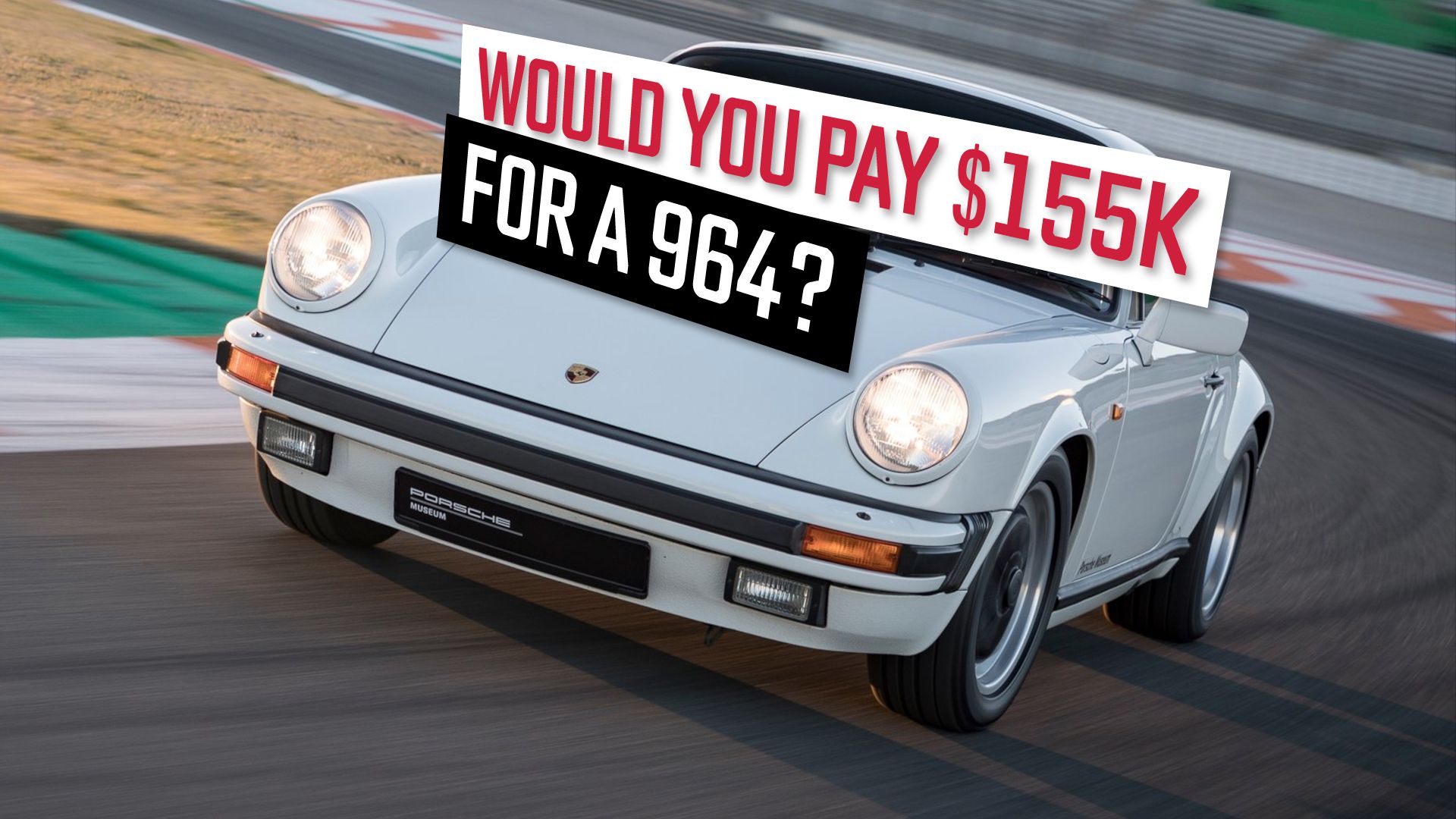
6 964 911 (1989-1994)
Average Used Selling Price: $154,306
|
Engine |
3.6-liter, naturally aspirated, flat-six |
|---|---|
|
Horsepower |
247 hp |
|
Torque |
229 lb-ft |
|
0-60 |
5.6 seconds |
Porsche introduced the type 964 at the tail end of the 1980s with slightly revised styling but a considerable evolution and expansion of its technological offerings. A majority of its technological underpinnings were new. Porsche’s electronically controlled four-wheel-drive system was a significant introduction in this generation, first for the 911 range but previously used in its 959 model. For the American market, the Tiptronic semi-automatic transmission was a new feature for the 911 model.

Related
The Rarest Porsche 911 Everyone Keeps Butchering
Porsche’s 911 is one of the most popular models to restomod these days, but one particular rare generation is the constant subject of attention.
In this generation, we’d see the introduction of models like the Porsche 964 Turbo, which was characterized by its wider physique, large rear wing, two oval tailpipes, and, most notably, a 3.3-liter turbocharged flat-six engine that produced over 300 hp, but later derivatives of this generation would feature a larger 3.6-liter flat-six engine. Used examples were once easy to come by and relatively affordable. However, because of the restomod trend, the 964 has become subject to all kinds of alterations by third-party companies like Singer. Because of the increased desire to reimagine this generation, the number of stock 964 911s has gone down significantly, thereby increasing the asking price of used examples.
5 993 911 (1994-1998)
Average Used Selling Price: $133,622
|
Engine |
3.6-liter, naturally aspirated, flat-six |
|---|---|
|
Horsepower |
272 hp @ 6,100 rpm |
|
Torque |
243 lb-ft @ 5,000 rpm |
|
0-62 |
5.6 seconds |
The 993 generation debuted just five years after the 964 generation. It was the last 911 generation to feature an air-cooled engine, meaning it was the last model eligible to enter the Luftgekühlt vintage car show. The 911 model’s technological underpinnings and design changed considerably. Gone was the black rubber lip that connected the body shell and the front bumper of the G-Series and 964 models. The rear wing had grown and was now flatter.
Initially, these models were offered in a rear-wheel-drive configuration. Still, four-wheel-drive variants debuted later in models like the Carrera 4 and 911 Turbo, which utilized a 3.6-liter flat-six engine with a twin turbocharger system, a first for the 911 moniker. This generation also marked the genesis of the ludicrous GT2 model, which gained a reputation for being unwieldy and tail-happy.

Related
Porsche Almost Built A 4-Door Sedan For A US Automaker Until John DeLorean Shut It Down
This unlikely collaboration is a somewhat obscure but interesting chapter of Porsche history.
4 996 911 (1998-2004)
Average Used Selling Price: $43,563
|
Engine |
3.4-liter, naturally aspirated, flat-six |
|---|---|
|
Horsepower |
300 hp @ 6,800 rpm |
|
Torque |
258 lb-ft @ 4,600 rpm |
|
0-62 |
5.2 seconds |
The replacement for air-cooled engine architecture was water cooling, which had rubbed many purists the wrong way, with the displeased Porsche fanatics stating that the 911 had lost its characterful soundtrack. However, while engine sounds had changed, the performance had increased significantly. This generation’s Carrera model was the quickest naturally aspirated 911 model before the GT3 variant, which, like its modern counterparts, was a track-focused performance-above-all model.
The 911 GT3 model was introduced in 1999, characterized as an offering that combined a lightweight, rigid chassis with a powerful naturally aspirated flat-six engine. The 996 GT2 variant would debut a year later based on the 911 Turbo platform and used an engine that was based on the 911 Turbo’s engine but had more power. Galvanized steel and higher-strength steel components were used to reinforce the body shell. The Turbo model used a 3.6-liter twin-turbocharged flat-six engine that produced over 400 hp. It was further improved using a competent all-wheel-drive system and conducted through a six-speed manual transmission. The 996.2 generation would debut in 2001, a facelifted offering featuring revised styling, a new entry in its model range, a new interior, and a revision of the 911 GT2 model.
3 997 911 (2004-2011)
Average Used Selling Price: $85,731
|
Engine |
3.6-liter, naturally aspirated, flat-six |
|---|---|
|
Horsepower |
325 hp @ 6,800 rpm |
|
Torque |
273 lb-ft @ 4,250 rpm |
|
0-62 |
5 seconds |
The 997 generation debuted with a similar body style compared to the 996 generation. However, styling changes like the round headlights and a slimmer and wider body characterized elements of the new generation. As far as engines are concerned, the 997 generation relied on water-cooled, naturally aspirated, and turbocharged engines. The model range for this generation consisted of 30 derivatives, including offshoots like the GT2, GT2 RS, and GT3, and two variations of the GT3 RS. The 2007 GT2 was the fastest street-legal 911 ever built, while the final evolution of this generation’s GT3 RS utilized a 4.0-liter naturally aspirated flat-six engine.
Similarly to the previous generation, the 997.2 generation was facelifted. Visual changes were subtle, but the majority of the changes introduced to the 997.2 generation were more efficient direct injection engines and a PDK twin-clutch gearbox. The PDK transmission was a significant improvement over the Tiptronic transmission. The GT3 RS with the 4.0-liter engine would be introduced in this generation.
2 991 911 (2011-2018)
Average Used Selling Price: $174,498
|
Engine |
3.4-liter, naturally aspirated, flat-six |
|---|---|
|
Horsepower |
350 hp @ 7,400 rpm |
|
Torque |
288 lb-ft @ 5,600 rpm |
|
0-62 |
4.6 seconds |
The seventh generation of Porsche 911 debuted in 2011 and was founded on a new platform. This platform saw the 911 model have a longer wheelbase than the previous generation and shorter overhangs. Visual distinctions also include new headlights and taillights. Some of the hardware changes introduced to this generation include new electric steering. The entire range in this generation was praised, with the Carrera model featuring a high-revving naturally aspirated engine.
Porsche updated this generation in 2015, the most significant change to the 991 generation. Porsche introduced the turbocharged 3.0-liter flat-six for models like the Carrera, while the 911 GT3 and its RS counterpart retained the naturally aspirated configuration.

Related
The Porsche 911 Range Explained
Choosing a Porsche 911 is like trying to pick candy in a sweet shop, so this is what differentiates each model so you know which will best suit you.
1 992 911 (2018-present)
MSRP: $122,095
|
Engine |
3.0-liter, twin-turbocharged, flat-six |
|---|---|
|
Horsepower |
388 hp @ 6,500 rpm |
|
Torque |
331 lb-ft @ 2,000 rpm |
|
0-60 |
3.3 seconds |
The 911 is now in its eighth generation and has recently undergone a revision of its technological underpinnings, now introducing hybrid technology into its powertrain. The lowest-ranking 911 in the 992 generation range is the Carrera, which has the same displacement as the previous models but features a revised intercooler system and a new turbocharging system. Total power output has been increased slightly compared to the 2024 model year.
Most notably, the new T-Hybrid powertrain is introduced in the 2025 911 GTS. It is based on the 3.6-liter flat-six engine but incorporates a single electric motor that generates an additional 54 hp and 110 lb-ft of torque. The turbocharger is also spooled using electricity, which effectively kills turbo lag.
Is it the best 911 ever made? Probably, but that’s because Porsche has been making these things for a while, and every new generation, while contentious at first, usually ends up at the top of any decent sports car shopping list.
Sources:
Porsche