
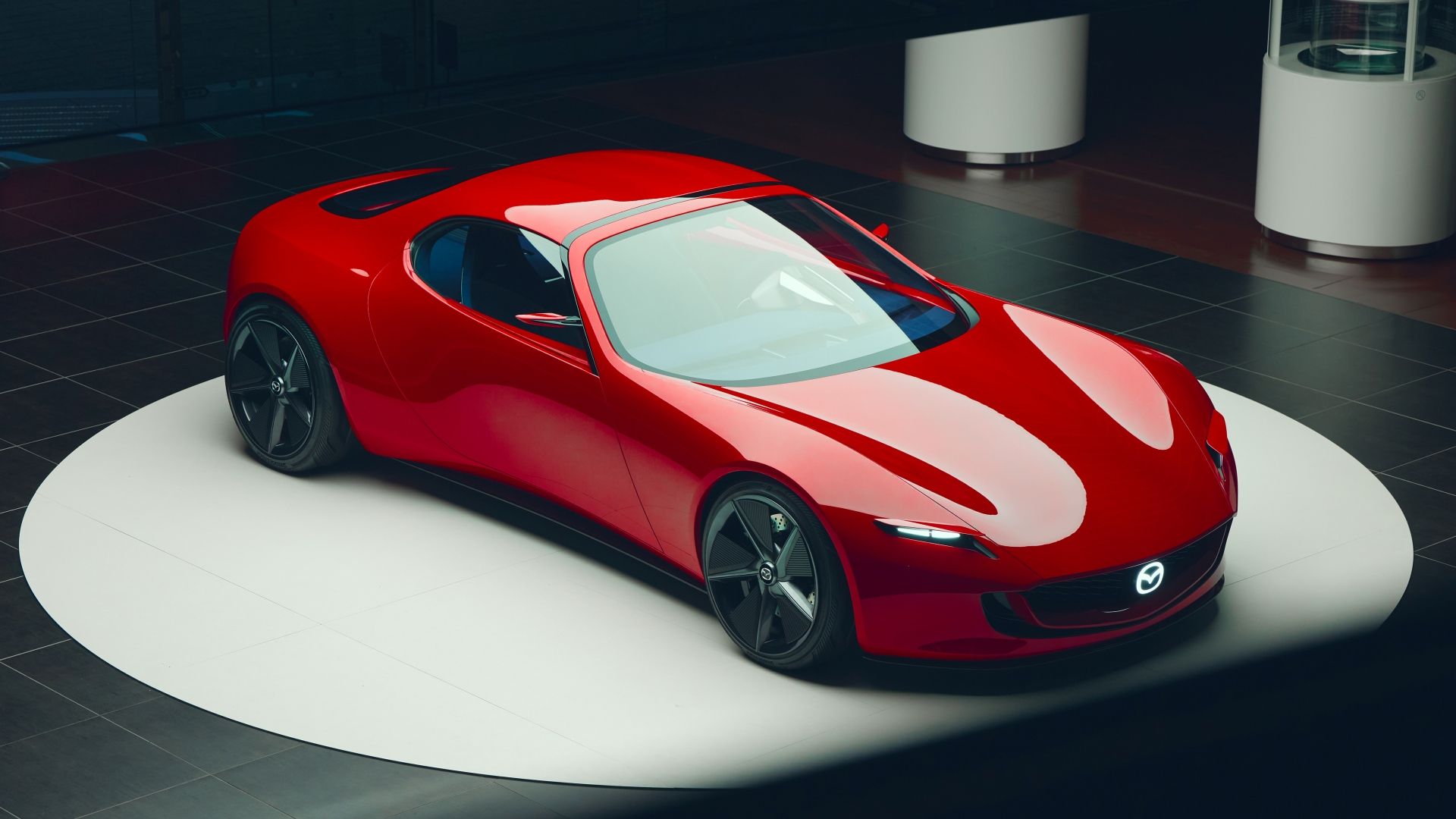
Mazda Iconic SP Could “Turn Into A Production Model In The Not-So-Distant Future”
It’s now been over a year since the Mazda Iconic SP concept left our mouths agape at the 2023 Japan Mobility Show, the sexy rotary-electric sports coupe previewing what we hoped would be a spiritual successor to the RX-7 and RX-8. Well, those hopes could soon be a reality, as Mazda has hinted the concept will enter production after all. That’s according to Masashi Nakayama, General Manager at Mazda’s Design Division, who spoke of the concept and how it will influence the automaker’s future:
“This concept is not just one of those empty show cars. It’s been designed with real intent to turn it into a production model in the not-so-distant future.”
– Masashi Nakayama, General Manager, Mazda Design Division
That’s by no means official confirmation, but if the Iconic SP has been designed with production in mind, there’s a high likelihood of it happening. Mazda also suggests that the concept has deeper significance for the brand, and the implications of its radical powertrain could have a big impact on the brand’s future.
Mazda
Mazda is a Japanese automaker founded in 1920 as the Toyo Cork Kogyo Co and only started producing vehicles in 1931 when it made the Mazda-Go auto rickshaw. The Japanese automaker’s first official car arrived in May 1960 when the Mazda R360 launched, starting Mazda as we know it today, although the Mazda name was only adopted in 1984. Mazda has a rich history in motorsport, including the honor of being the only manufacturer to win the 24 Hours of Le Mans with a car not powered by a reciprocating engine.
- Founded
- January 30, 1920 (as Toyo Cork Kogyo Co)
- Founder
- Jujiro Matsuda
- Headquarters
- Hiroshima, Japan
- Owned By
- Publicly Traded
- Current CEO
- Masahiro Moro
A Rotary Engine That Can Run On Any Carbon Neutral Fuel
Naohito Saga, Executive Officer at Mazda’s R&D Strategy Planning Division, has made some bold claims about the powertrain in the Iconic SP, but the most notable is that it will be able to run on almost any carbon neutral fuel available to it, reducing the carbon emissions of a rotary-powered sports car by up to 90%. That’s a huge deal because the rotary engine was always thought to be too inefficient to have a place in modern automotive society.

Add CarBuzz to your Google News feed.
“The rotary engine can be very compact and very powerful at the same time. That’s one advantage, but [it can also] be powered by various types of fuels, and that could give us an edge in the race to find a feasible solution for the future of mobility.:
– Naohito Saga, Executive Officer at Mazda’s R&D Strategy Planning Division
Saga explains that there are “quite a few energy sources for carbon-neutral fuel […] made using hydrogen and carbon dioxide, and biofuels, made from raw materials including plants, which are compatible with petrol and diesel engines respectively.” The carbon-neutral fuel made from plants is something Mazda has keenly investigated, developing a fuel from seaweed that runs cleaner than traditional diesel, but it’s the fuels made from hydrogen and carbon dioxide that have piqued our interest the most in recent times, with Porsche taking the lead on this synthetic fuel development and manufacturing, pressuring the EU into opening loopholes for combustion beyond 2035, and even finding ingenious solutions to the restrictions governments want to impose on the use of such e-fuels.
But with Mazda’s new rotary engine able to run on a variety of fuels, it means that whether there’s Porsche’s synthetic fuel available or seaweed-derived fuel in your vicinity, you’ll always have access to a clean fuel source to power your sports car.

Related
What’s Happening With Mazda’s Rotary Sports Car Revival?
Mazda has continually teased the revival of a rotary sports car, but it still hasn’t happened yet. Where does the project stand?
Mazda will also invest heavily in carbon capture, with the captured carbon dioxide being ripe for conversion into more guilt-free synthetic fuel. “Today, we are competing in the Super Taikyu endurance racing series in Japan to test the potential of carbon-neutral fuel,” explains Saga, continuing, “but in the future, we intend to experiment with technology to capture carbon dioxide as well.”
Not A Rotary Engine As We Know It
But there’s one major difference between this new rotary powertrain and the ones that powered the likes of the RX-7 and RX-8. Instead of directly powering the wheels, this two-rotor setup will generate power for an electric powertrain, allowing Mazda to combine the benefits of an EV – instant response, high power, and efficiency – with those of a rotary ICE car – light weight, a low center of gravity, and the emotional sound only a rotary engine can create.
While full details haven’t been divulged, Mazda says the “two-rotor rotary EV system” can produce 365 horsepower, routed to the rear wheels. This is an all-new rotary engine and will be the first powertrain to emerge from Mazda’s newly re-launched rotary development team which launched in February as the RE Development Group. In addition to its benefits of being able to run on carbon-neutral fuel, its compact and lightweight nature is also a boon for performance, being placed low in the Iconic SP’s chassis and within the wheelbase for a low and centralized center of gravity.
The way Saga and Nakayama talk about the Iconic SP suggests it’s closer to production than we initially thought, but neither mentions a timeline for when it may reach production. That means while rotary fans can look forward to a future that looks as good as this, we don’t know when that will be.
“Standing by the car, you should be able to picture what sort of engine would be housed under the bonnet. That’s how committed we were to crafting this concept car. The more time you spend looking at it, the more the car will reveal to you.”
– Masashi Nakayama, General Manager, Mazda Design Division