

The Corvette That’s Part Chevrolet, Part Ferrari
Over the course of the Chevrolet Corvette’s long history, there have been countless rare examples, one-off versions, and special editions of the quintessential American sports car. However, some are more unique than others.
One example of a Corvette that’s nothing quite like any other in history is the Rondine, which is Italian for “swallow”, the migratory bird species that famously heralds the start of spring. Starting off as a C2 Corvette, the Rondine was made into what it is today thanks to the input of legendary automotive design firm Pininfarina. Here is the story of the all-American car with an Italian soul, the generation of the Corvette that spawned it, and the man who helped bring it to life.
Related
The 10 Coolest Special Edition Chevrolet Corvettes Ever Made
The Corvette is arguably one of the coolest cars of all time, but these 10 special edition ‘Vettes take the coolness factor up to 11.
The C2 Corvette: An Overview
The origins of the Corvette’s second generation lie in two different concept cars developed in the late ’50s: the “Q-Corvette”, created in 1957, and the Stingray concept, which arrived two years later in 1959. Both these cars featured sleeker, more angular lines than those of the rounded, blob-like first-gen Corvette, and they ended up setting the blueprint for what the model would become in decades going forward.
Hidden headlights, which would remain a staple feature of the Corvette until 2005, made their debut on the C2. The second generation of the Corvette was also notable for being the first to offer the Z06 performance package, which included several mechanical upgrades, such as larger shocks and springs, a larger fuel tank, and upgraded brake linings. A larger front anti-roll bar was also included in the package. Only 199 C2 Corvettes sporting the Z06 package were ever built.
Pininfarina And The Creation Of The Rondine
This one-of-a-kind Corvette is a perfect blend of Italian style and American brawn. Thanks to the design input of legendary firm Pininfarina, it looks like something that wouldn’t be out of place on a winding road in the Alps, and yet it retains the unmistakable Corvette character underneath it all. Based on the chassis of the 1963 Corvette, the Rondine was supposedly commissioned by Chevrolet itself, who hired Pininfarina to reimagine what the Corvette would be with an Italian touch.
Whether the Rondine was actually commissioned by Chevrolet is still the subject of debate and speculation. On the surface, the goal of the project was rather strange from a modern marketing perspective. In order to promote the newly-released C2 Corvette at the 1963 Paris Motor Show, Chevrolet supposedly asked Pininfarina to create a car that looked nothing like the one they were trying to sell. The story doesn’t really hold up, and it is still unknown whether the concept for the Rondine was actually related to Chevrolet, although the fact that both cars were displayed in Paris at the same time with no complaint from GM seems to point in that direction.

Related
Ranking Every Generation Chevrolet Corvette ZR1 By Top Speed
The ZR1 is the Corvette’s most powerful model, so let’s see how fast every generation can go.
No matter who actually made the request, Pininfarina set out to bring this creation to life, and made a number of radical changes to the original car’s lines and bodywork. The Rondine’s new silhouette was flowing and dynamic, shedding some of the aggressiveness that had characterized the original C2.
On the front end, the headlights were exposed rather than concealed, and the bumper and grille were both redesigned. The louvers that had been prominent on the side of the car were replaced by smooth, sleek bodywork with uninterrupted lines. The rear fenders also lie smooth and flat rather than flaring out, and the sweeping roofline recalls the look of a classic Ferrari of the era. The taillights were also swapped out for a more European-inspired design. Finally, the car was finished in a gorgeous teal hue.
Underneath it all, the mechanical underpinnings were all but left untouched, retaining the driving character of the C2 Corvette. Power came from a 5.4-liter small-block V8, which sent 360 hp through the rear wheels via a four-speed manual transmission. The interior was also left unmodified, upholstered in beige leather.
A Design Legend: Tom Tjaarda’s Other Works
The man responsible for the design of the Rondine was, ironically, American. Tom Tjaarda was born in Detroit, with a family connection to the world of automotive design. His father, John Tjaarda, was responsible for the design of the Lincoln Zephyr. The latter would later earn a place in pop culture history, by becoming the first car ever owned by a young Elvis Presley.
Tjaarda decided to follow in his father’s footsteps, developing an interest in car design and winning an internship at renowned firm Carrozzeria Ghia; in order to follow his passion, he relocated to Turin in the late 1950s. In 1961, he moved to Pininfarina, and two years later he began work on the Rondine.
The Rondine was one of his first major projects at Pininfarina, but it was by no means the last. Tjaarda left his mark on the history of car design through several of the firm’s iconic models, from the Ferrari 330 GT 2+2 to the Fiat 124 Spider. After leaving Pininfarina and returning to Ghia, he was also responsible for designing the legendary De Tomaso Pantera.

Add CarBuzz to your Google News feed.
What Happened To The Rondine After The Paris Motor Show?
After the Rondine was showcased at the Paris Motor Show, it remained in Pininfarina’s possession, and was kept in the company’s own museum for nearly half a century. Eventually, in 2008, it was sold at auction, as Pininfarina struggled to clear its debts amid financial troubles. The Rondine went to American classic car dealer and collector Michael Schudroff, for the eye-watering price of around $1.6 million. Today, it still makes the occasional public appearance at high-profile automotive events around the world.
Other Special Corvettes From The C2 Generation
The second generation of the Corvette includes a handful of unique versions of the car, from secret racers to retirement gifts. Here are three very special Corvettes from the C2 era.
Corvette Grand Sport

One part of the C2 Corvette’s history that ended up being a crucial chapter of the Corvette story was the creation of the Grand Sport, a short-lived racing version built under secrecy by “Father of the Corvette” Zora Arkus-Duntov in the early 60s. Only five examples of the Grand Sport were ever completed, but they still managed to achieve a relative degree of success on the track; today, each Grand Sport is worth around $5 million.
Harley Earl/Bill Mitchell “Styling” Corvettes

These two unique Corvettes were created in the mid-60s for two key figures in the model’s history: Harley Earl and Bill Mitchell, who had both served a stint as head of GM’s famous “Art and Color” design division (later renamed the Styling Division, hence the cars’ nickname). While Earl’s car was given to him as a retirement present, Mitchell commissioned his own car according to his preferences.
Both cars come with a number of custom details that distinguish them from “regular” Corvettes: Earl’s is equipped with four stainless steel sidepipes and dual-circuit four-wheel disc brakes, as well as an accelerometer and altimeter on the gauge cluster. Mitchell’s, meanwhile, has unique wheels and a custom egg-crate grille, as well as chromed side vents, an extra two taillights (six instead of four), and a blue leather interior. Both cars are finished in a striking shade of metallic blue, which was not on offer for standard production Corvettes at the time.
Split-Window 1963 Corvettes
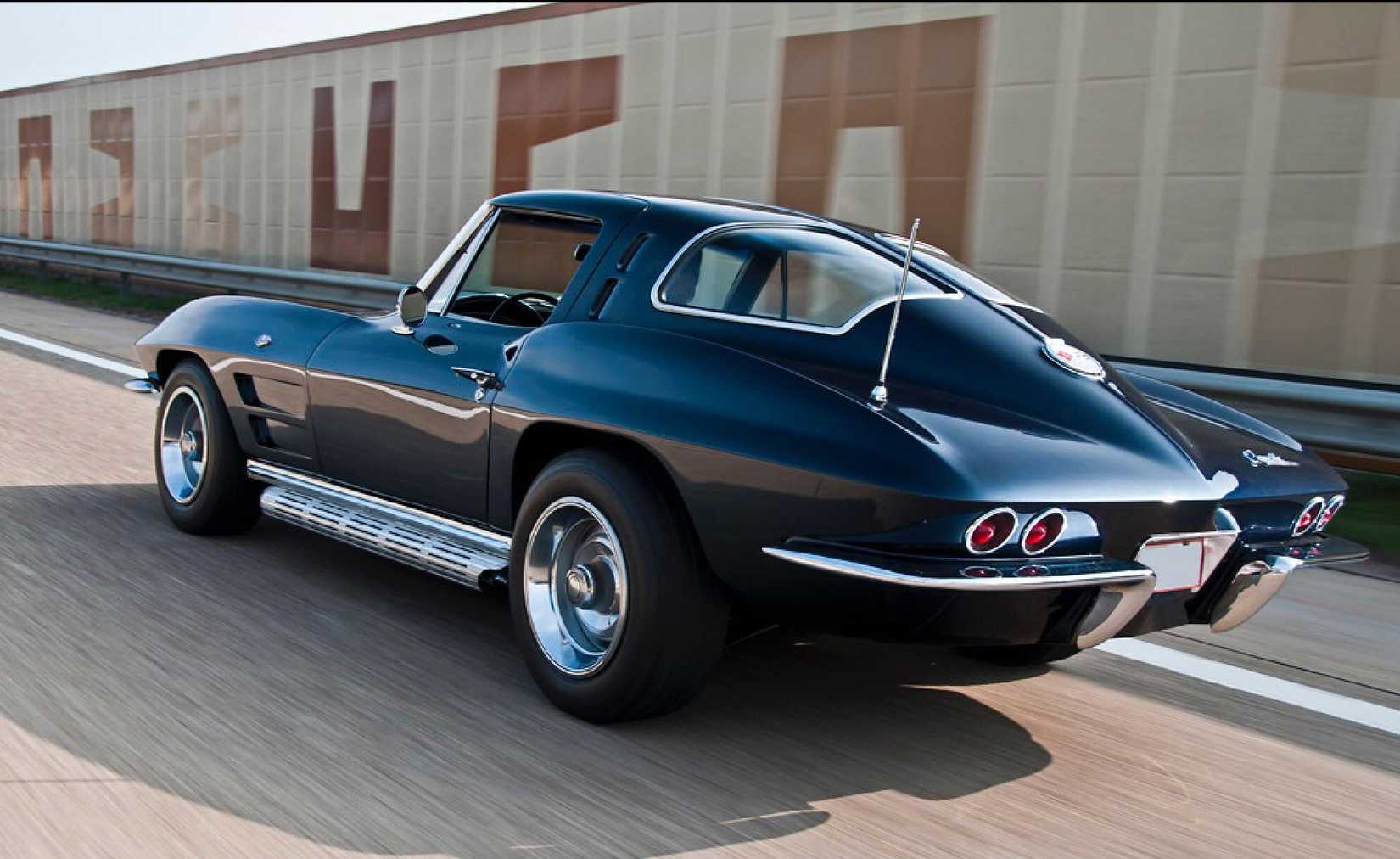
This last C2 Corvette is not a one-off, but it certainly remains somewhat of a rarity: at the very start of the C2 generation in 1963, Chevrolet decided to launch the Corvette with a split rear window, a styling cue borrowed from the nautical world. However, Zora Arkus-Duntov was not a fan of the split window, which was also a risk factor from a safety perspective due to reduced visibility. In the end, the split window was discontinued after only a year on the market, and only 10,594 Corvettes sporting it were ever built.
Sources:
CorvSport.com
,
Collecting Cars
,
Hagerty