
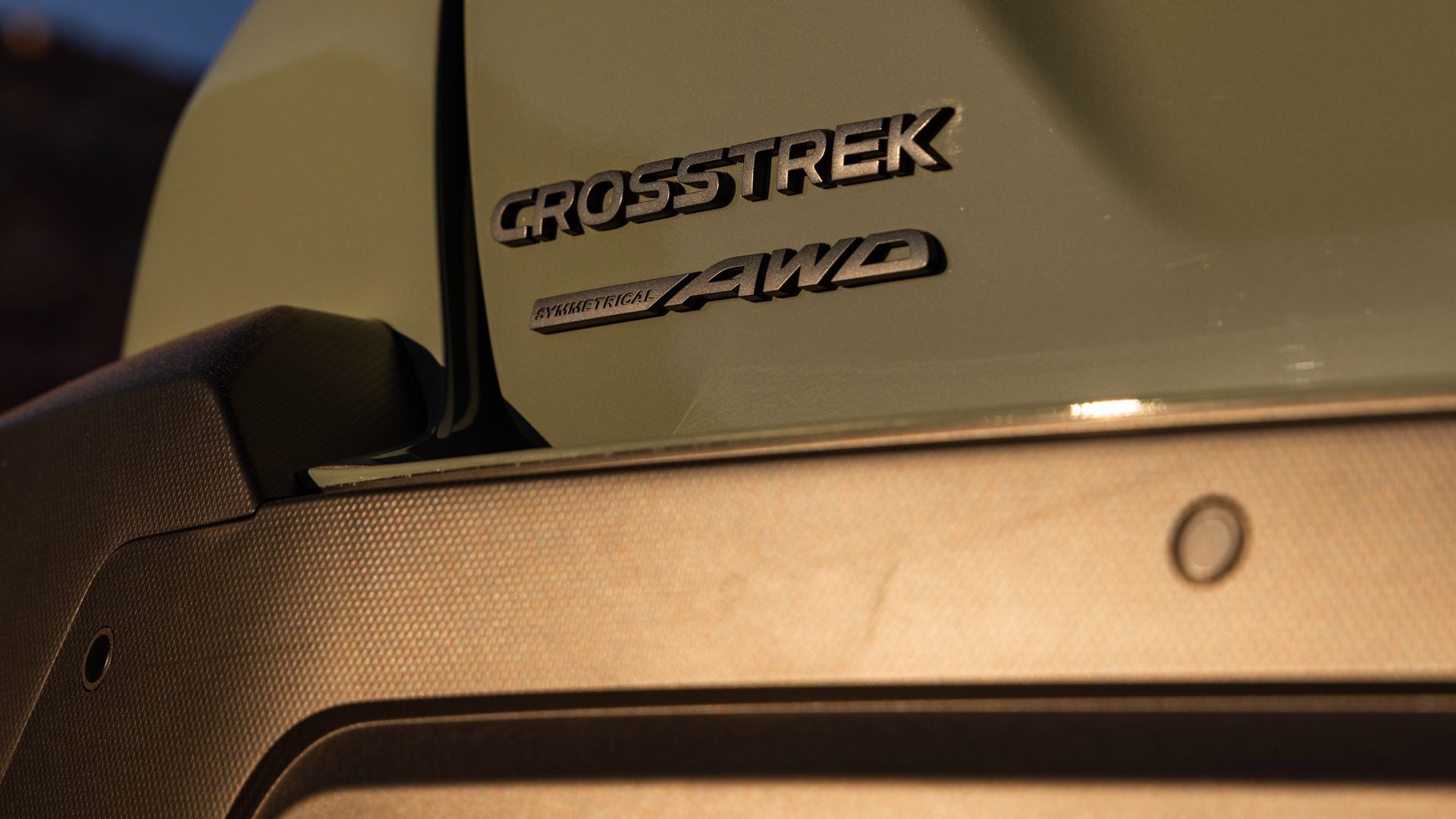
The Most Important Change Subaru Made To The New Powertrain It Borrowed From Toyota
As most of you know, Subaru and Toyota have a partnership stretching back more than a decade. It all started in 2005, and the result was the first-generation Toyota 86 and Subaru BRZ sports cars. Both cars received successors, but the collaboration extends well beyond that. Five years ago, the Subaru Crosstrek Hybrid started using Toyota’s hybrid technology.
While both Japanese automakers have worked closely with the hybrid tech, the Toyota and Subaru versions of the same model vary quite a bit underneath. Specifically, Subaru was not satisfied with Toyota’s AWD drivetrain. For Subaru, all-wheel drive is king, and every model they produce which is equipped with the drivetrain must meet their rigorous standards. So, they’ve taken Toyota’s hybrid powertrain and brought it back to the drawing board for a proper Subaru-ing.
Related
Subaru Finally Has A Powertrain Worth Getting Excited About
Subaru’s new powertrain has a name that gets straight to the point.
The following information regarding both Toyota and Subaru hybrid tech and other info was sourced from official manufacturer press materials.
Subaru Deemed Toyota’s Hybrid AWD Design Unworthy
Three Reasons Why Subaru Altered Toyota’s recipe
- Toyota’s hybrid powertrain was seemingly not up to Subaru’s standards
- Differentiates Subaru’s and Toyota’s products more effectively
- The Subaru and Toyota brands focus on slightly different goals
As most of us know, Subaru doesn’t mess around when it comes to the all-terrain competence of its vehicles. For decades, Subaru has been continuously perfecting its legendary AWD system called Symmetrical All-Wheel Drive. They’ve done so both on its civilian models, along with its past World Rally Championship vehicles.
When it comes to Subaru’s borrowed Toyota hybrid powertrain, we need to look at the best example of Subaru’s fiddling. The models in question are the hybrid Subaru Forester and Subaru Crosstrek. One of the key differences built into the Subaru model involves its drivetrain. As we said before, Subaru won’t let a car with their name on it under-perform when faced with rough terrain.
The Big Difference
If you’ve got even a rudimentary idea of how conventional all-wheel drive works, you’ll know that it’s a rather simple system when it’s broken down into its main components. In the conventional setup, an all-wheel drive setup consists of a driveshaft connecting both the front and rear axles together. In most systems these days, power is sent to only one axle in normal conditions, but will engage the other if traction loss is detected.
Subaru’s Symmetrical All-Wheel Drive (SAWD) is not the same. It’s one of a few permanent AWD systems, which means power is always going to the front and rear. Toyota’s hybrid setup is different in that it’s an eAWD system. That means the front axle is driven by the engine, while the rear axle is driven by electric motors. There is no physical coupling between the two elements, and there’s an obvious downside. Once the battery is depleted, drive to the rear axle is lost, which could leave you in a pickle if you’re off-roading.
That’s why Subaru still includes a driveshaft that goes from the engine to the rear axle. That way, the rear axle will always have something powering it. The new hybrid powertrain also has one electric motor mounted in the gearbox, and another on the rear axle. The combined power output hasn’t been unveiled, but the hybrid system can add 118 horsepower and 199 lb-ft. If you add that to the 2.5-liter flat-four’s output of 158 hp and 154 lb-ft of torque, you have a recipe for some serious fun.

Related
4WD Vs. AWD – Knowing the Difference
How they differ, which is better, and which you should buy.
Subaru And Toyota Have Worked Together Before
Most of us remember the 2013 introduction of the Toyota GT 86/Scion FR-S and the Subaru BRZ. Fundamentally, both cars are exactly the same. They both sport the 2.0-liter 4U-GSE/FA20 flat-four engine in their first generation. While both motors carry different codenames, the engines are the same. The current, second-gen cars use the FA24D flat-four. The chassis is also identical, along with the drivetrain, transmission options, even down to the tires used.
Really, the only difference between these two is styling. For the first generation, the Toyota version used a slightly more aggressive front bumper styling, featuring an angular front grille and diagonally-placed turn signals and fog lights. The Subaru, on the other hand, used softer lines on its front fascia. Its turn signal/fog lights were arranged as a stack, and its grille resembled an inverted trapezoid with soft edges.
For the second generation, the Subaru BRZ and the Toyota GR86 – as it’s now known – offer a few more differences which extend beyond front-end looks. For one, the BRZ offers a stiffer front end, using slightly more race-ready front springs, making it, reportedly, feel more sorted around a track. However, the Toyota GR86’s lack of tuned suspension makes for a more wild personality, as it’s more apt to kick its tail out around bends, and is a bit easier to control.

Add CarBuzz to your Google News feed.
Why Subaru Will Not Compromise On Its Drivetrain
Subaru’s penchant for all-wheel drive prowess isn’t just due to random stubbornness, they’ve cultivated and honed their SAWD system over the last 52 years, ever since the first iteration of the system was installed within the 1972 Subaru Leone Wagon. Back then, the SAWD system was wholly mechanical, and relied on just a center differential and half-shafts to achieve its independently-controlled wheels. But, as rudimentary as it was, it worked very well.
As time wore on, Subaru began to unveil vehicles with more electronically-controlled SAWD systems, such as the one seen in the 1986 Subaru XT, which featured the first push-button AWD system offered by Subaru. Then, in 1989, Subaru released the Legacy sedan, which brought their SAWD system to the mass-market in an easily-digestible family sedan, and from there, SUbaru’s popularity skyrocketed, largely thanks to the Legacy’s ability to handle rough roads much better than any other family sedan or wagon of the time.
The SAWD system was further honed on rally stages, with it being mainly responsible for Subaru’s six World Rally Championship wins. Today, Subaru’s use of SAWD continues in virtually every vehicle they make. The system has become largely electronic, and the days of part-time, push-button all-wheel drive are gone, with all models now featuring full-time systems. It seems that even Toyota, one of the most reliable brands to ever grace the world’s roads with their vehicles, doesn’t live up to Subaru’s strict AWD standards.

Related
Here’s What Subaru Symmetrical All-Wheel Drive Really Means
It’s not your average, every-day all-wheel drive, that’s for sure.
Sources:
TractionLife.com
,
Toyota.com