
What Is Juice Jacking, And Should You Be Worried?
Slowly but surely, Americans are starting to adopt electric vehicles as they begin to look past some of the well-publicized worries about cost, range, and battery life. But just as they may be enjoying the benefits of EV ownership, here comes something else to be worried about.
Tesla
Tesla, Inc. is an American electric vehicle manufacturer largely attributed to driving the EV revolution. Through the Model S and subsequent products, Tesla has innovated and challenged industry conventions on numerous fronts, including over-the-air updates, self-driving technology, and automotive construction methods. Tesla is considered the world’s most valuable car brand as of 2023, and the Model Y the world’s best-selling car in the same year, but the brand’s greatest achievement is arguably the Supercharger network of EV charging stations.
- Founded
-
July 1, 2003
- Founder
-
Martin Eberhard, Marc Tarpenning
- Headquarters
-
Austin, Texas, USA
- Owned By
-
Publicly Traded
- Current CEO
-
Elon Musk
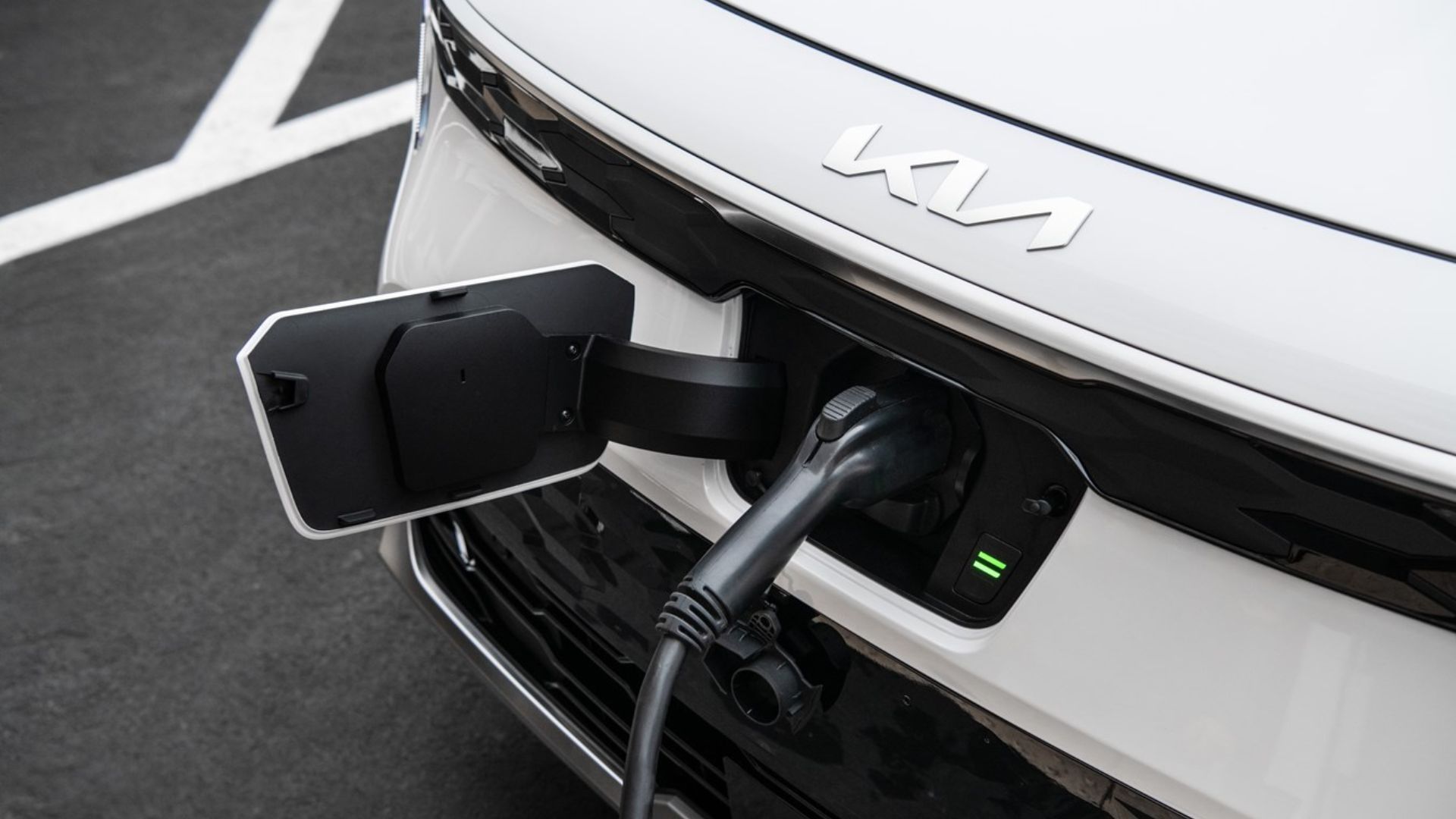
For drivers who do not have the luxury of a home charger or who may drive long-distance journeys in a vehicle like a Kia EV6, a phenomenon known as juice jacking is the point of focus. But what is this, and how worried should you be now?

Related
Breakthrough Means EV Charging In The Time It Takes To Fill Up Gas Could Be A Reality
The University of Michigan is back again with another tech breakthrough, this time dramatically reducing the time to fully charge an EV in cold temps.
We took a closer look at the emerging risk of juice jacking. We wanted to know exactly what this is and where the risk came from to see if EV owners should worry. The information in the article comes from online authority sources, while the information in the table relates to the current Kia EV6. Any opinions in the article are those of the author.
Juice Jacking As A Threat
|
2025 Kia EV6 Base RWD Specifications |
|
|---|---|
|
Engine |
Permanent magnet synchronous motor |
|
Transmission |
Single-speed reduction gear |
|
Drivetrain |
Rear-wheel drive |
|
Power |
167 hp |
|
Torque |
258 lb.-ft |
The threat of juice jacking has been around for some time and first came to the public’s attention back in 2011 at a hacker’s conference in Las Vegas called DEF CON. During that conference, some enterprising individuals showed how criminals could compromise USB ports in public places, such as an airport terminal. As a conventional USB cable can transmit not just power but also data, such a criminal could access the user’s smartphone by stealth. Potentially, they could install a tiny device within the USB port itself so that when the user plugged their phone in, that device would activate. It could either transfer malware to the user’s phone or otherwise access some of the valuable information therein.
Today, the threat may be larger as, in theory, a criminal could compromise some of those EV charging units and, potentially, access your vehicle. So, when you connect your car, truck, or SUV to top off your battery, things could go south. Instead of just electricity flowing into your car, malicious code could as well, or thieves could harvest some data via the same cable. Yes, those cable connections are very different to a standard USB set up. EV charging connectors use standards like SAE J1772, CCS, CHAdeMO, or Tesla’s NACS. These primarily deliver power and not data, but they often include some data lines as well to manage the charging parameters. For example, voltage control, authentication, and safety handshakes will all require an element of data transfer.
The theory suggests that during a juice-jacking attack, the compromised delivery unit could upload malware to your car’s infotainment or telematics system. It could also extract a lot of data from your connected driver profile and even interfere with some on-board diagnostics. It may even be able to control the vehicle’s operating system to an extent, to potentially gain backdoor access later.

Related
The Cybersecurity Risks Threatening The Automotive Industry, And How To Combat Them
Cybersecurity is an increasing area of concern for the automotive industry. Here are some of the ways automakers are tackling new challenges.
Is This Really A Thing?
With all that potential negativity, it’s important to inject a dose of realism. As of 2025, there’s no confirmed evidence that juice jackers are actually targeting EV stations in the real world. So, nobody has injected ransomware into your Rivian through a level 2 plug and your Kia EV6 has not transmitted all its data to some sketchy North Korean server.
Still, cybersecurity researchers are not blasé. Even though there may be no public cases so far, these researchers are certainly aware of the risk. After all, as time goes by, EVs become ever more reliant on software and more connected to outside sources. Officials also worry that certain breaches may go undetected, especially in a corporate or fleet environment, as hackers experiment and learn their craft.
A couple of years ago, researchers at a French cybersecurity firm showed how it was, indeed, possible to access an EV’s infotainment system using a software vulnerability that was not related to a charging port. This may not be comparing apples with apples, but it nevertheless shows how computerized cars may be now and, just like any other connected device, vulnerable.

Related
Here’s What We Learned Charging A Rivian R1S At A Tesla Supercharger
With more EVs now given access to Tesla’s Supercharger network, here’s our experience with the process – and some advice from experts.
Understanding The Potential Risk
The majority of public EV charging stations should be safer, and especially those that are part of a major network, such as ChargePoint, Electrify America, or Tesla Supercharger. After all, those companies will already have strong encryption protocols and should regularly update their firmware. But this level of proactivity does not necessarily extend to third-party stations or those that are not part of a major network. Some of those chargers in hotel parking lots, shopping centers, or apartment complexes might not follow the same security protocols and could, theoretically, be more vulnerable.
What An Attacker Could Access
If an attacker wants to gain access to your EV during a juice-jacking attempt, what could they do? Firstly, they could tap into your infotainment system, which is where they may find your contact information, travel history, synced calendars or emails, and app logins. They could talk to your vehicle’s telematics unit, which controls data transmission and remote functions. This means they could potentially access all your vehicle diagnostics and location tracking to understand your driving patterns, or even where you live.
But here again, do EV charging protocols really support high-bandwidth data transfers or are they only in place for simple handshakes and the like? In truth, standards like CCS and J1772 will just focus on charging control signals and not act as a full software interface. But that doesn’t mean that the threat dissolves to zero, but just suggests that juice jacking is likely to be much harder to perform on an electric vehicle than on a smartphone. That said, no company is going to want to become the poster child if the first confirmed EV juice jacking event occurs. This is why most OEMs put a lot of effort into technology, endpoint security, encryption, and firewalls. And behind the scenes, the big OEMs have programs that proactively search for issues before any bad actor can find them.

Related
The GMC Hummer EV Pickup’s NACS Adapter Is A Total Road Trip Game Changer
Fast charging speeds and a reliable charging network make the NACS charger a huge upgrade for the big electric truck.
How You Can Protect Yourself At A Public Charging Station
While it’s not time to run around screaming, a little caution could go a long way. And while you shouldn’t panic about juice jacking at your nearest level 2 charger, you may want to take some additional precautions. For example, only use trusted charging networks through providers like EVgo or ChargePoint. These networks are big and potentially have a lot to lose, so they’re very likely to update firmware and secure their systems as much as possible. You should also avoid any poorly maintained chargers, especially if something just doesn’t look right. Note that some stations may also offer USB sockets near to a charger or parking area and these can pose a far greater juice jacking risk than the charger itself. You may also want to turn off data syncing if you can while you are charging.
Ensure that your car’s software is as up-to-date as possible as a future juice jacking exploit is likely to home in on unpatched vulnerabilities. If you are charging your vehicle at a simpler wall box outlet, use the cable that the manufacturer supplied you with to avoid community-supplied ones.
Be Aware But Not Afraid
Juice jacking may sound like a futuristic cyber thriller plot and for now, it is. But most EVs do allow for some form of data exchange, so there’s always a potential risk. Yes, charging systems are much less vulnerable than those of smartphones or tablets, but cybersecurity professionals are still worried. And as more and more electric vehicles hit the roads with a projection of maybe 30% of new car sales by the end of the decade, they expect these risks to evolve. So, don’t be complacent but rather informed. You can still clean the air, save money, and enjoy the freedom that EV ownership will bring you, but be vigilant. And remember that juice jacking is not the pastime of some steroidal bodybuilder, but a crime that could just be coming to a charging station near you.
Sources: Tesla, EVgo.