
Why Aren’t They Viable Yet?
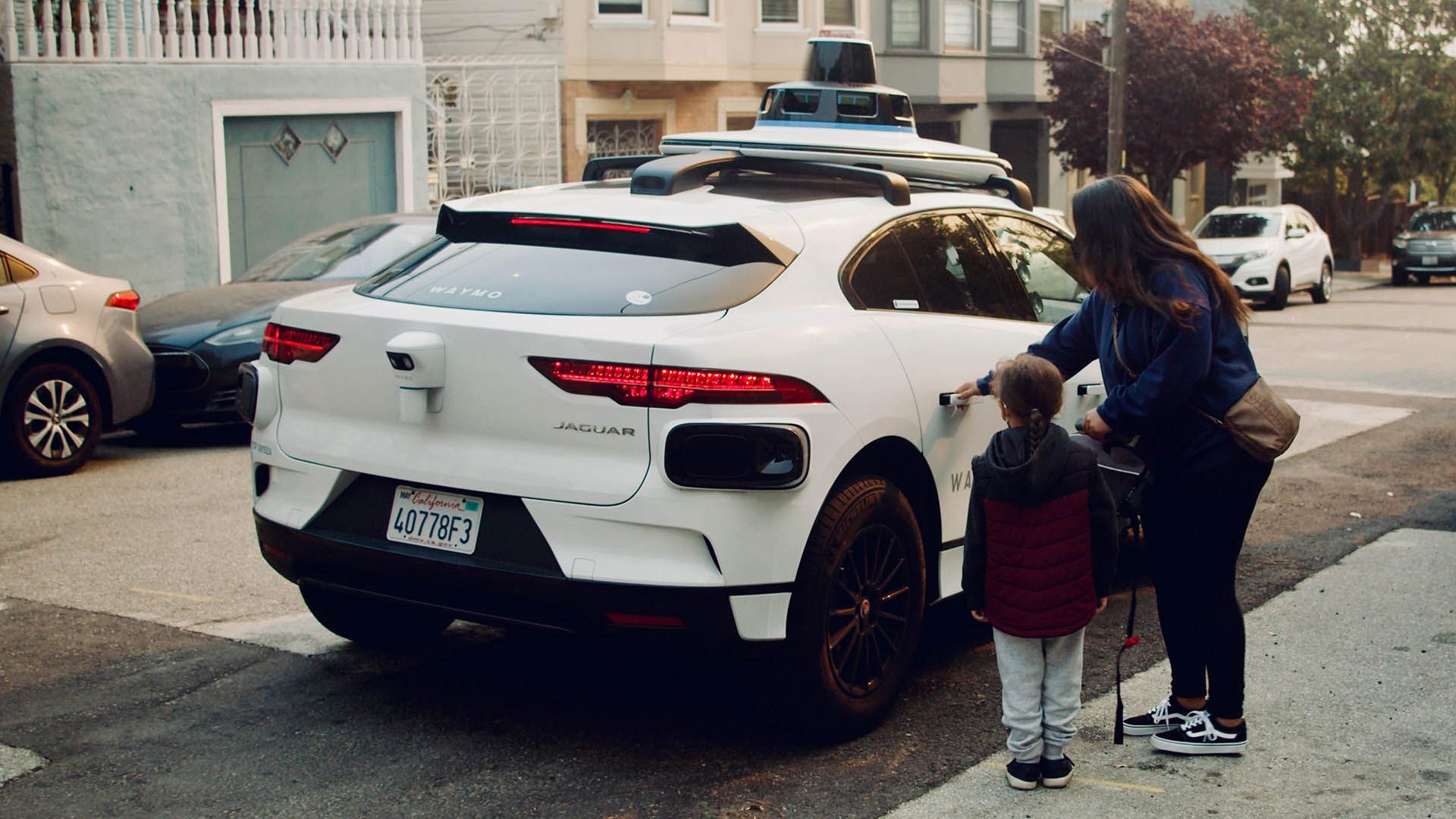
You remember last year when all those Waymo cars got jammed up in a car park, and they woke up half of San Francisco honking their horns at each other until the crack of dawn? It was one of those incidents that really brings a country together in shared laughter, or at least, everyone who wasn’t trying to get a good night’s sleep in San Francisco was laughing.

- Base Trim Transmission
-
Automatic
- Base Trim Drivetrain
-
All-Wheel Drive
- Base Trim Horsepower
-
425 HP
- Base Trim Torque
-
475 lb.-ft.
- Fuel Economy
-
120 MPGe Combined
But besides being hilarious, the Waymo incident also helped to illustrate that, well, self-driving cars just aren’t there yet, so don’t expect your Tesla Model Y to get you to work hands-free anytime soon. The honking was part of the car’s crash-prevention system, automatically blasting the horn to prevent low-speed impact. The honking incident occurred because these cars were reading one another as obstacles, rather than registering them as other cars trying to make their way around the parking lot. This time, the problem was kinda silly and mostly harmless, but it begs the question: if you can’t trust these cars not to wake up half the Bay area at night, how can you trust them on highways and public roads?
The following is based primarily on research into NHTSA data and legislation pertaining to self-driving cars. Any opinions offered herein are those of the author unless otherwise attributed.
Waymo Is Actually Ahead Of The Curve, Believe It Or Not
The NHTSA recently closed an investigation into Waymo robotaxis, just like the ones involved in that ridiculous honking incident, ultimately determining that the May 2025 recall for 1,212 units was satisfactory. To go over the details of this story…
- The NHTSA began investigating based on 22 incidents involving 440 Waymo vehicles, and 17 collisions.
- Some of these incidents involved the self-driving robotaxis disobeying traffic lights or exhibiting “unexpected behavior.”
- Waymo voluntarily recalled 1,212 robotaxis blaming a “software glitch” for the incidents.
- Waymo’s voluntary recall saw the company improving the system’s detection and avoidance system for roadway barriers including “chains, gates, and other gate-like roadway barriers.”
In closing the investigation into these incidents, the NHTSA cited Waymo’s track record for voluntary recalls and their willingness to provide data and internal analysis. A Waymo spokesperson stated that “we are committed to prioritizing safety, and we’re pleased that NHTSA has concluded the investigation and closed our case.”
No Serious Injuries, But…
While Waymo may have suffered some bad press when their cars made headlines for incessant honking, the fact is that the robotaxi company is a strong example of how to go about business the right way. The NHTSA doesn’t have to hold Waymo’s feet to the fire to get a recall, the company invests a lot of time and money into testing, and, when something does go wrong, Waymo is usually pretty transparent about the problem.

Related
Tesla’s Robotaxis Are Already Breaking The Law
The NHTSA is already investigating Tesla’s new Texas robotaxi fleet service after multiple reports of the vehicles violating traffic laws.
All the same, these incidents illustrate the simple fact that we’re not quite ready for fully-autonomous traffic. A fatal crash involving a Tesla kicked off an investigation late last year into more than two million self-driving units, including the Cybertruck, the Model S, the Model X, the Model Y, and the Model 3, and Tesla is on the record admitting that full-self driving could result directly in auto accidents, even as the electric automaker has been asking the Freedom of Information Act to strike certain data from the record for reasons of “competitive harm.”
Meanwhile, a Ford Mustang Mach-E was involved in a fatal accident in Texas last year when the SUV ran into a Honda CR-V, killing the Honda’s driver. The Mach-E’s BlueCruise partial self-driving feature engaged at the time, leading NHTSA investigators to look into what role the system played in the accident.
These aren’t isolated incidents. The NHTSA was already looking at BlueCruise at least as far back as 2022, in relation to problems with Ford robotaxis that would stop short of their destination or become immobile at inopportune times. Self-driving has made tremendous strides in recent years, but almost anytime it comes up in the headlines, it’s bad news.

Related
NHTSA Investigating Crashes While 2.5 Million Teslas Might Not Actually Smart Summon
Actually Smart Summon might not be so smart.
Why Aren’t Self-Driving Cars Ready Yet?
When we talk about self-driving cars, there can be a tendency to get a little too… philosophical, about the whole thing. You can argue that, for instance, human drivers are subject to the same lapses in reason as robots, and, in fact, we may make those mistakes more frequently than would a machine. But then there’s the question of accountability, and so on and so on.
The Technology’s Not There… And Neither Are The Roads, And Neither Is The Legislation, And Neither Is The Culture
We could sit here all day quoting sci-fi novels and our favorite Star Trek episodes, but the bottom line is that there are specific technological, engineering, cultural, and legislative hurdles that need to be overcome before self-driving cars are a viable option for daily commuters, taxi services, and public transportation. Automation could ultimately make roads safer, but, for the time being, it seems to introduce as many problems as it solves.
As Robert Sumwalt, former chairman of the National Transportation Safety Board, put it to CBS MoneyWatch last year “Right now, it’s like trying to send a rocket to the moon in 1910, when the Wright Brothers were still working on their planes.”
How Will We Get To The Next Step In Fully-Autonomous Vehicles?
You’ve probably heard Tesla’s self-driving system referred to as “Level 2,” but, what exactly does that mean? According to the Society of Automotive Engineers, there are six levels of self-driving, starting with zero, for “no-automation at all.” Here are the remaining five…
- Driver Assistance. This covers basic automation like cruise control.
- Partial Driving Automation. This covers Advanced Driver Assistance Features where you have, for instance, adaptive cruise control that can accelerate, decelerate, and even turn automatically. A human still sits behind the wheel, ready to take control at a moment’s notice, so it’s not considered to be true self-driving.
- Conditional Automation. Here, the car can handle the vast majority of driving, and has environmental detection capabilities, and the human is present largely as a fail-safe.
- High Automation. All driving can be handled by the vehicle, “under specific circumstances.” This requires geofencing, that is, the creation of invisible boundaries to keep the vehicle on track.
- Full Automation. No human interaction required. The car can handle itself in all conditions. Level five is more of a dream at this moment than it is a reality.
It’s Not Just A Technological Hurdle
Chances are, the technology will get to a point where it can reliably get you where you’re going in one piece, even on unpredictable terrain, in bad weather, and on crowded freeways.

Related
Regulators Could Shut Down Tesla Sales In A Very Important Region
A hearing with the California DMV will determine the company’s future in the state.
But, that still leaves some key challenges for self-driving to overcome:
- Public acceptance. We all know flying is safer than driving, but you still know people who are afraid to fly, right? The same will likely apply to self-driving for years after it’s been proven viable.
- Safety. Fully self-driving cars aren’t exactly the same thing as driver-oriented cars, and the NHTSA will need to develop a new set of standardized tests for these vehicles before they can be adapted at scale.
- Legislative challenges. At present, no state has passed a total ban on self-driving cars, but the laws vary from state to state, and it’s not out of the question to think that a vehicle that’s totally legal in Texas might be illegal when it crosses the border into New Mexico.
- Infrastructure. Going back to “geofencing,” it’s not just a matter of making safe self-driving cars, but building roads that can accommodate them.
In short, it’s not any one problem keeping these cars off the road. We’re simply not there yet when it comes to infrastructure, legislation, or culture. The technology is only one part of the puzzle.