
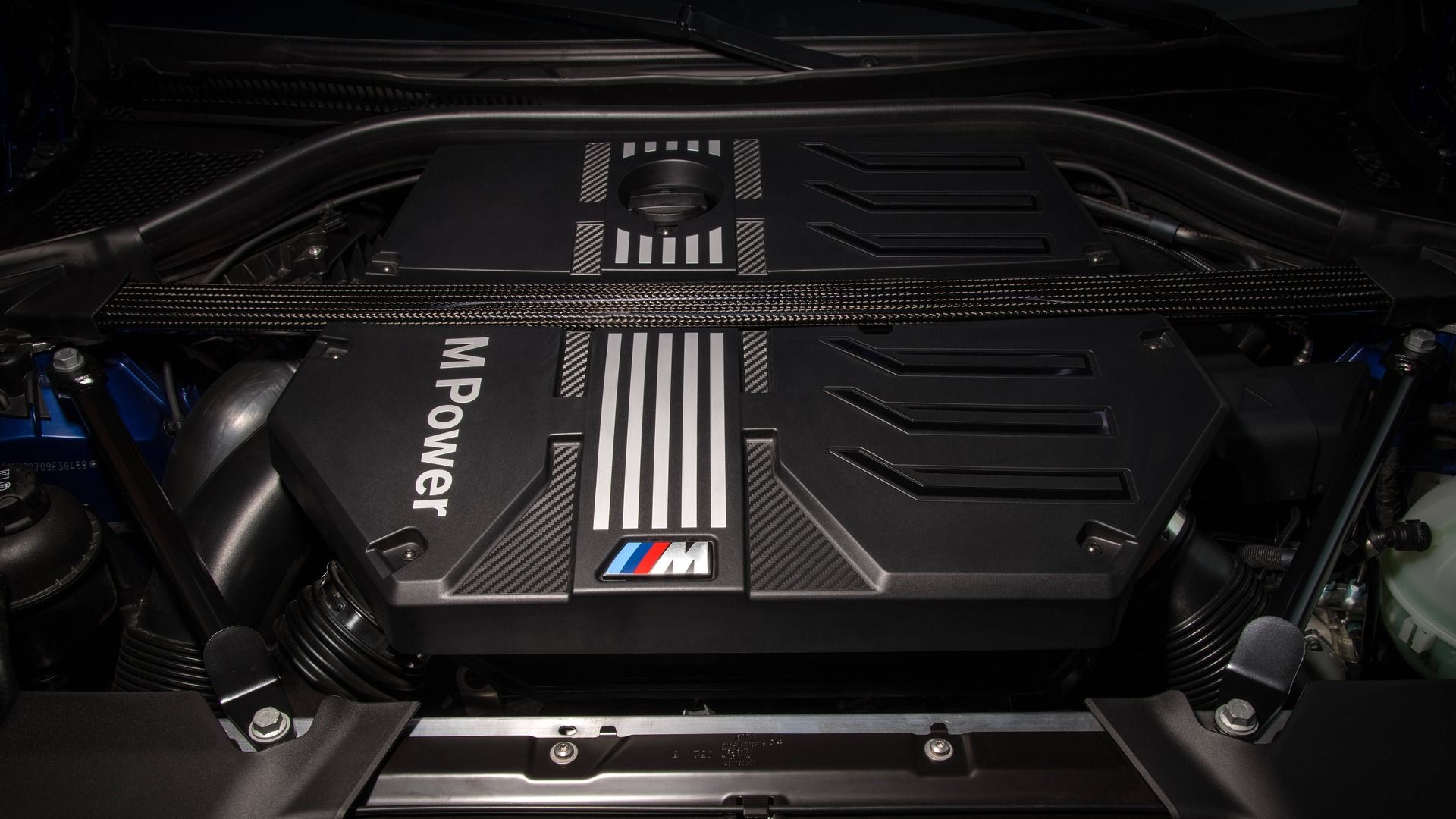
Why The Inline-Six Is A Better Engine Than A V6
Inline-six engines are not unheard of in modern cars, but they’re something of a rarity in the American auto industry. And yet, the perception among auto enthusiasts is generally that an i6 is vastly superior to a V6 engine in a number of ways.
This begs the question whether it really is better to have all your ducks in a row than configured in a V formation, or if a lot of this can be chalked up to car myths and superstition, like red cars costing more to insure. So, let’s start by asking why people think the inline-six is the superior configuration.
Opinions for this overview have been collected from various automotive forums around the web, including the r/cars subreddit and bimmerforums.com. Performance data for comparison purposes has been sourced from the automakers, while reliability data has been collected from sources including J.D. Power, the NHTSA, and various maintenance websites, for comparison to industry and segment averages.
The Survey Says: Why Motorists Think The Inline-Six Is Superior To The V6
If we take a look at auto forums around the web, the one thing we keep reading is that an inline-six is “better balanced.” This isn’t the configuration’s only strength, but it’s what the consensus generally points to. The inline-six naturally has perfect balance, and that makes it superior in a number of ways. For instance:
- Naturally-balanced engines are more reliable. One user points out that inline-six engines have “more main bearings than actual cylinders,” which makes for a sturdier, better-lubricated design which produces less force and stress than a comparable V6.
- Naturally-balanced issues produce more torque. Since the pistons cancel one another out in each movement, more of the inline-six’s output goes into the axles, which results in more torque and horsepower.
- The i6 runs smoother, producing a more pleasing engine sound. One user notes the Triumph TR6 as having a “perfect” exhaust note, and while that may be a matter of preference, it’s an opinion that’s hard to argue with.
While we agree that the TR6 sounds good, the ultimate example is the Jaguar E-Type’s old-school inline-six.
Other reasons for preferring the i6 to the V6 include:
- They’re easier to work on. One user points out that the spark plugs are easier to change on a typical i6 than a typical V6. The consensus here is that i6 engines have fewer parts to worry about, which naturally means you’re going to have an easier time under the hood. And it’s not just repairs. Inline-six engines are said to be easier to modify, as well.
- Inline-sixes typically produce more low-end torque. This is said to owe to longer strokes and smoother power delivery. Some users point out that this was truer before modern tech like exhaust valve timing and variable intake, but all the same, the i6 has an easier time getting there without the advanced control modules.
Are Inline-Six Engines Actually Superior To V6 Engines?
Note that we’re not stating any of the above as facts. These are simply the reasons why many gearheads will tell you that a straight-six is superior to a V6. Some of this comes down to preference or personal experience. If someone hates swapping spark plugs on a V6 engine, you can’t really convince them otherwise by showing them facts and figures. Likewise, someone might not like having to remove the cowl on a BMW to get at the spark plugs in the i6 engine.
Related
The Most Powerful Inline-6 Powered Cars On Sale In America
The smooth powertrain has come a long way.
What we’re concerned with here is going to be the stuff that really does come down to facts and figures. That is: are inline-six engines more reliable, and are they more powerful? To figure that out, we’re going to have to take a look at some of the i6 engines available in the US today, and see how they compare to industry averages and competing V6 engines. Let’s start with the two top-selling vehicles in the US, the F-150 and the Silverado, comparing the 2024 Silverado 1500s 3.0-liter i6 diesel engine to the 2021 F-150’s Power Stroke V6, the last diesel engine available for the full-size Ford.
|
2021 Ford F-150 |
2024 Chevrolet Silverado 1500 |
|
|
Engine |
3.0-Liter Power Stroke V6 Diesel |
3.0-Liter Turbo Inline-Six Diesel |
|
Power |
250 hp |
305 hp |
|
Torque |
440 lb-ft @ 1,750 rpm |
495 @ 2,750 rpm |
|
Maximum Towing Capacity |
12,100 lbs. |
8,800 lbs |
Taking a look at these performance specs, maybe the inline-six fans have a point. Admittedly, these models are separated by a few years, but V6 technology hasn’t come that much further since the start of the decade, so it doesn’t seem unfair to compare these two engines. The F-150 is rated for a higher maximum towing capacity, but that has more to do with chassis strength than with what’s under the hood. With the same displacement, the Silverado’s inline-six engine cranks out 55 extra lb-ft of torque and 55 extra horsepower.

Add CarBuzz to your Google News feed.
Given the sheer breadth of engine options available in both of these trucks, it might not be feasible to judge their respective diesel engines for reliability based on overall J.D. Power ratings or NHTSA data. Luckily, the Silverado isn’t the only vehicle left in the US running on a straight-six. Let’s take a look at some vehicles known for their i6 engines.
|
J.D. Power Rating |
Annual Maintenance Estimate |
Ten-Year Maintenance Estimate |
NHTSA Complaints On File |
|
|
2024 BMW 740i |
80/100 |
$847 |
$14,769 |
4 |
|
2024 Jaguar F-Pace |
80/100 |
$1,123 |
$16,448 |
0 |
|
2024 Mazda CX-90 |
65/100 |
$777 |
$7,778 |
1 |
Note that the BMW and Jaguar both skew towards more expensive maintenance owing to their status as luxury vehicles. This doesn’t necessarily mean that they break down more frequently, only that parts tend to be more expensive to service when something does go wrong, and routine maintenance like oil changes and tire rotation tend to be more expensive than in non-luxury vehicles, as well.

Related
Ford F-150’s Power Stroke Diesel Is Dead
Say goodbye to this oil burner.
The average full-size luxury sedan costs around $976 per year to repair, according to RepairPal. You’ve no doubt heard that BMWs cost an arm and a leg to keep running, but this actually puts the BMW 740i ahead of its segment by more than $100. The Mazda CX-90 is similarly affordable to maintain, compared to a $784 average for non-luxury full-size SUVs.
Jaguar’s F-Pace doesn’t fare so well, though. The F-Pace is a mid-size luxury SUV, which typically costs around $807 to maintain, for the segment. The F-Pace will run you around $200 extra each year to keep it running.

Related
Jaguar Kills Off Every Single Model Except One
JLR has confirmed it will kill off five models, including the E-Pace and I-Pace, as it prepares to become an all-electric brand.
The Mazda CX-90’s scores are noteworthy because the J.D. Power rating is based on issues per 100 vehicles sold. If the CX-90 is generating a lot of complaints, while still being cheaper to maintain than its competitors, then that should go to show that, when something does break on an i6, it can be cheaper to fix than a comparable repair for a V6.
Admittedly, we’re looking at a fairly small sample size here. But, there aren’t all that many inline-six engines to pick from in the US in the first place. Outside of BMW, Mazda, and Jaguar, you’re more likely to find an i6 in a school bus or a 2500 pickup than in a sedan or an SUV.
Why Don’t We See More Inline-Six Engines In American Vehicles?
The answer to this one is pretty simple: i6 engines are kind of unwieldy.
Let’s put it this way: think back to the last time you had to move. What was easier to pick up and carry, the recliner or the sofa? The recliner might have been heavier than the sofa, but the compact, squared-off shape made the chair easier to pick up, easier to put on the truck, easier to move through your front door, and easier to place in your new living room. Well, the same principle applies to V and inline engines. We’re comparing hamburgers to hot dogs.

Related
Hurricane Engine: All The Cars Powered By Stellantis’ New Twin-Turbo I6
Looking for V8 power without the high gas bills?
One of the reasons the Silverado still packs an optional i6 is because it’s a full-size pickup, meaning it has the space for a wide range of engines, from the entry-level 2.7-liter turbo-four, to the i6, to the 5.3-liter V8. Building a large truck to receive any kind of engine you want to put in it isn’t so tricky, but if you build a sedan or a compact SUV for an inline-six, the inline-six is probably the only engine it will ever house.
Consider, too, that front-wheel drive is the most popular drivetrain configuration these days, and that’s easier to pull off with a transverse V6 that doesn’t take up a lot of space under the hood. It’s not just something gearheads say, inline-six engines do offer a number of advantages over V6. But versatility isn’t one of them, so the V-configuration is more attractive for automakers.
Sources:
NHTSA
,
J.D. Power
, RepairPal, CarComplaints, CarEdge