
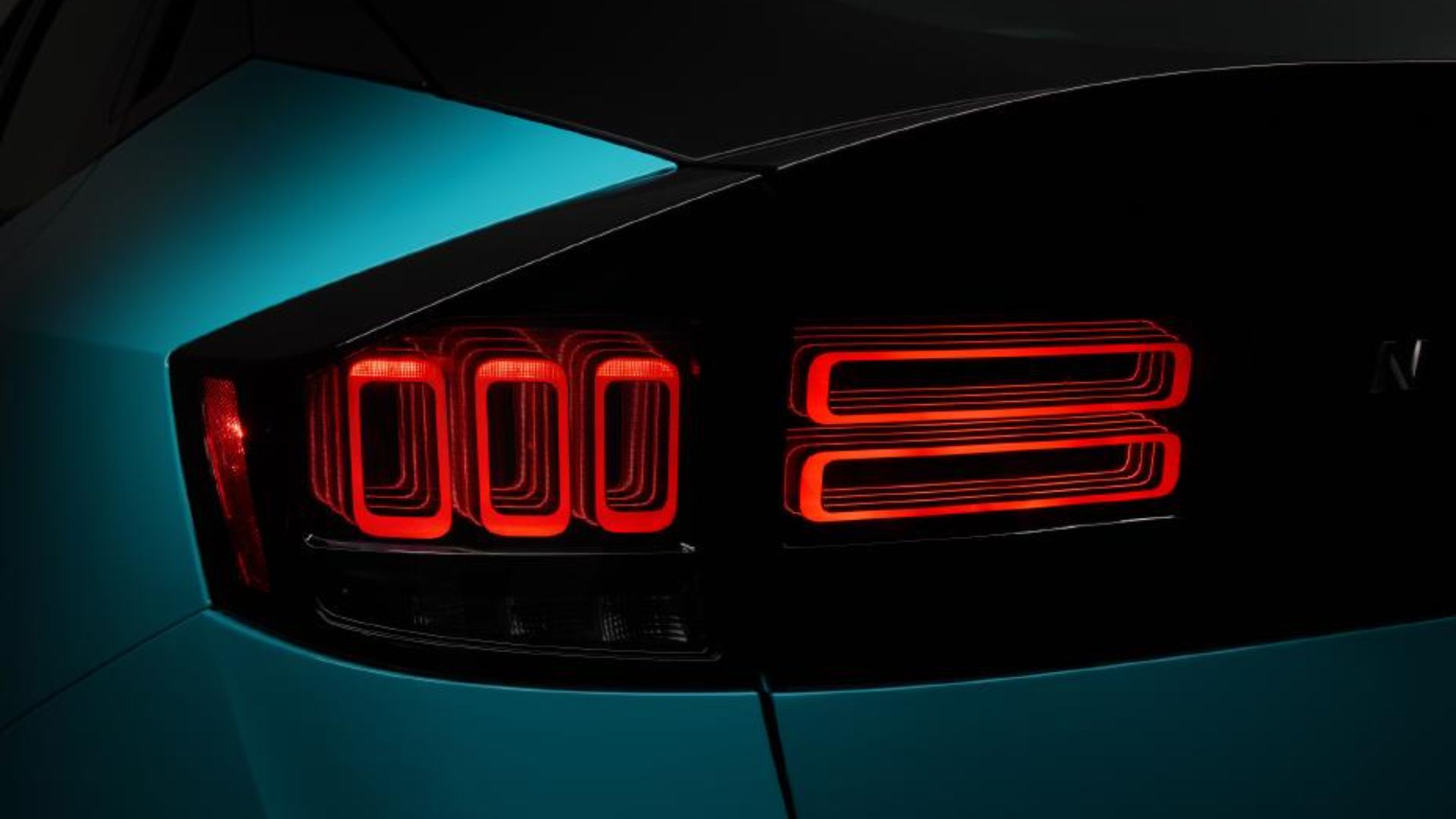
Why The New Nissan Leaf’s Taillights Are More Special Than You Think
People who tend to hanker over the old days may often tell you that new cars today all look the same. “What happened to the bold designs of the past,” they may say, “where cars had character, and you could easily identify any particular model from a distance?” Automotive designers hate to hear that, but they also realize how important it is to craft something that will grab attention and get people to visit their local dealer. And Nissan’s designers think they’ve come up with a very cool idea, as one of the most interesting features of the company’s new Leaf EV may be right at the back.

- Base Trim Engine
-
Electric
- Base Trim Transmission
-
Single-speed Automatic
- Base Trim Drivetrain
-
Front-Wheel Drive
For this feature, we gathered information from the manufacturer’s website and authority sources and any opinions are those of the author.
Lights That Tell A Tale
|
2026 Nissan Leaf Specifications |
|
|---|---|
|
Engine |
Single electric motor |
|
Transmission |
Single-speed direct drive |
|
Drivetrain |
Front-wheel drive |
|
Power |
174–214 hp |
|
Torque |
254–261 lb-ft |
Most vehicle stylists tend to treat tail lights as an afterthought as, after all, they have a specific job to perform. They can’t contribute much to either the look or the performance of the vehicle, and as such, they tend to blend into the overall design. However, Nissan has taken a far more layered and thoughtful approach to turn the tail lights into a branding statement and a bit of a technological masterpiece as well. In the latest generation Leaf, and particularly the flagship Platinum+ trim, you’ll find Nissan’s 3D holographic light structures. These certainly represent a different approach to rear-end lighting, but they also borrow some styling cues from other Nissan icons.
How Nissan’s 3D Holography Works
On the Platinum+ version of the new Nissan Leaf, the advanced multi-plane LED lighting system gives you the illusion of movement and depth when you look at it from different angles. It doesn’t have the simple LED structure that most rivals choose but instead, has layered light bars, which are staggered and also include reflectors to produce a quasi-holographic appearance. The system’s output is clearly visible in daylight, which is not always easy to achieve, but at night, the effect is both bold and sophisticated.
The engineers have placed these light bars behind smoked lenses and precision-cut optical layers. They say that this will enhance visibility and spatial awareness for any drivers coming behind, so your new Leaf will not only be more stylish but safer as a result. The lower trims, or in other words the S+ and SV+, have standard LED tail lights but without any holographic effect. So only those who choose the top specification Leaf will get the stand-out rear treatment.

Related
The 2026 Nissan Leaf Will Help You Forget About A Cheap Tesla
The 2026 Nissan Leaf is better than ever, thanks to a liquid-cooled battery, slippery new styling, and a range of more than 300 miles.
The Hidden Tribute To Nissan’s Sporting Soul
But wait, there’s more. The Nissan design team has embedded some subtle cultural references, including a 2+3 bar pattern within the tail light layout. This is a symbolic nod to “Ni” and “San” which, the story goes, represent the Japanese pronunciation of the number 23. Of course, those snippets together almost form the full word “Nissan,” but they also reference the famous racing #23. Motor sport enthusiasts may note that Nissan would often choose the number 23 for its race cars in Group C and Super GT. Remember the R390 GT1 and R35 GT-R Nismo GT500, which would invariably carry the number 23 to great success? So, as Nissan has hidden this feature as part of its Easter Egg-like plan, it aims to generate some real enthusiasm among brand loyalists.
Sporting Genes From The Z
Look closely at the back of the new Nissan Leaf in its Platinum+ trim, and you’ll see a special, black tailgate trim panel. This stretches across horizontally between the tail lights and has a gloss black finish, but it’s more than just a styling choice and seems to be a nod to the Nissan Z sports car. On the Z, you’ll find a wide horizontal black bar with signature LED tail lights and Nissan might be trying to inject a sense of sportiness or premium finish into what you might otherwise consider to be a city-focused hatchback.
Nissan seems to have connected its performance and electric lineups in a way that may be trying to elevate customer perception. Of course, there’s a big difference between customers who might choose a new Nissan Z and someone who will opt for an EV, but buyers of the Leaf Platinum+ are getting more than just a loaded electric vehicle. Instead, Nissan hopes that they’ll buy into the company’s cunning strategy and believe that they’re getting something that’s rather special.

Related
The New Nissan Leaf Is The Brand’s Most Aerodynamic Car Yet
Nissan reveals some little details about the third-generation car.
Why All This Matters In A Tight EV Marketplace
As we’ve said, the world is swimming in a sea of lookalike EV crossovers and hatchbacks, and it’s increasingly hard for any manufacturer to differentiate its models. Those design teams are always looking for innovation in the world of the electric vehicle and while design breakthroughs are more important than ever, their work has practical meaning, too. Certainly, major manufacturers are falling over themselves to address range concerns and make their vehicles more aerodynamic, but as well, they’re seeking visual distinction. And that’s why Nissan’s crafty tail light project is so clever.
In the Platinum+ model, particularly, Nissan has managed to create a distinctive visual signature that’s functionally useful, good-looking, and culturally relevant at the same time. And in doing so, the team didn’t need to change the shape of the vehicle but, instead, came up with a low-cost but high-impact solution that could bring long-term benefits to the brand.
Nissan may also have stolen a march on some of its competitors. After all, the rear end of vehicles like Tesla’s Model 3 and Model Y are not especially memorable and while the Ioniq 5 tail lights stand out due to their pixel motive, they don’t feature any of Hyundai’s cultural tie-ins. In contrast, Nissan has managed to create details that invite conversation and could well drive additional numbers to its dealer lots. And for buyers who are trying to decide between similarly priced EVs, small details can often tip the scales. Racing enthusiasts on a budget might love the fact that the Platinum+ Leaf has a design reference to Nissan’s sporting legacy and some of the company’s more expensive models. Perhaps that’ll be just enough to tear them away from a rival offering.

Related
The 2025 Nissan Leaf EV Is Better Where It Counts The Most
Nissan has reworked the Leaf to be more efficient, but it’s also made it more comfortable to drive around town.
Nissan’s Design Detail Masterclass
Nissan has long been a leader in the EV space and, here again, is doing something right. It’s decided not to simply refresh its Leaf and has moved far beyond just a predictable styling exercise. In fact, the new tail light structure on the Leaf combines elements of heritage, engineering, esthetics, and exclusivity in a way that few other manufacturers attempt. You’ve got the 3D layering, the hidden 2+3 symbolism, and the sporty-inspired black panel, to make this more than just a lighting setup, but rather a full statement. Don’t forget that people used to be less than kind when describing the overall look of the Nissan Leaf, so the Japanese company has come a long way. And now, Nissan is starting to tell a new chapter of its story, but in this case, it’s doing so through the medium of light.
Sources: Nissan